


Best Weight Loss Injections and How Weight Loss Injections Work


Searches for the best weight loss injections lead to three FDA-approved options: Wegovy (semaglutide), Zepbound (tirzepatide) and Saxenda (liraglutide). In trials, these injections produced average weight loss of 8.0% to 20.9% over 56 to 72 weeks, alongside diet and activity changes. Each injection mimics gut hormones that lower appetite, so the right fit depends on health history, not on a ranking.
Key Takeaways
- Three injections hold FDA approval for chronic weight management in adults: Wegovy, Zepbound and Saxenda.
- Trial weight loss ranged from 8.0% on Saxenda to 20.9% on Zepbound, against 2.4% to 3.1% on placebo.
- Nausea, diarrhea, vomiting and constipation lead the reported side effects, and the labels warn about thyroid tumors, pancreatitis and gallbladder disease.
- Compounded versions are not FDA-approved, and vitamin or hCG injections are not approved for weight loss.
- Weight returns after stopping: the share of people keeping a 5% loss fell from 86.4% to 48.2% in one follow-up.
What Are the Best Weight Loss Injections?
The weight loss injections with FDA approval for chronic weight management are Wegovy, Zepbound and Saxenda. The National Institute of Diabetes and Digestive and Kidney Diseases (NIDDK) lists these three among six FDA-approved long-term weight medications. The other three drugs are pills. A fourth injection, Imcivree, is limited to rare genetic causes of obesity.
Trial averages do not decide the fit for any one person. Prescribers weigh body mass index (BMI), health conditions, dosing schedule and side-effect history, as Yates and South describe in Australian Prescriber. A supervised GLP-1 weight loss plan starts with that review.
| Injection | Active ingredient | Schedule | Approved use |
|---|---|---|---|
| Wegovy | Semaglutide | Weekly | Adults and ages 12+ with obesity; adults with overweight plus a weight-related condition |
| Zepbound | Tirzepatide | Weekly | Adults with obesity or overweight plus a condition; sleep apnea in adults with obesity |
| Saxenda | Liraglutide | Daily | Adults and ages 12+ over 60 kg with obesity; adults with overweight plus a condition |
| Imcivree | Setmelanotide | Daily | Ages 6+ with 1 of 4 rare genetic causes of obesity |
The table shows that these types of weight loss injections differ in schedule and approved use. Weekly schedules apply to Wegovy and Zepbound, while Saxenda and Imcivree are daily. The next section explains the shared mechanism behind the first three.
How Do Weight Loss Injections Work?
Weight loss injections work by copying gut hormones that signal fullness. Wegovy and Saxenda copy one hormone, glucagon-like peptide-1 (GLP-1). Zepbound copies GLP-1 and a second hormone, glucose-dependent insulinotropic polypeptide (GIP).
Yates and South report three actions from these hormones. They act on appetite centers in the brain, which raises fullness and changes the enjoyment of food. They slow stomach emptying, which prolongs fullness after a meal. They also raise insulin release and lower glucagon in the pancreas.
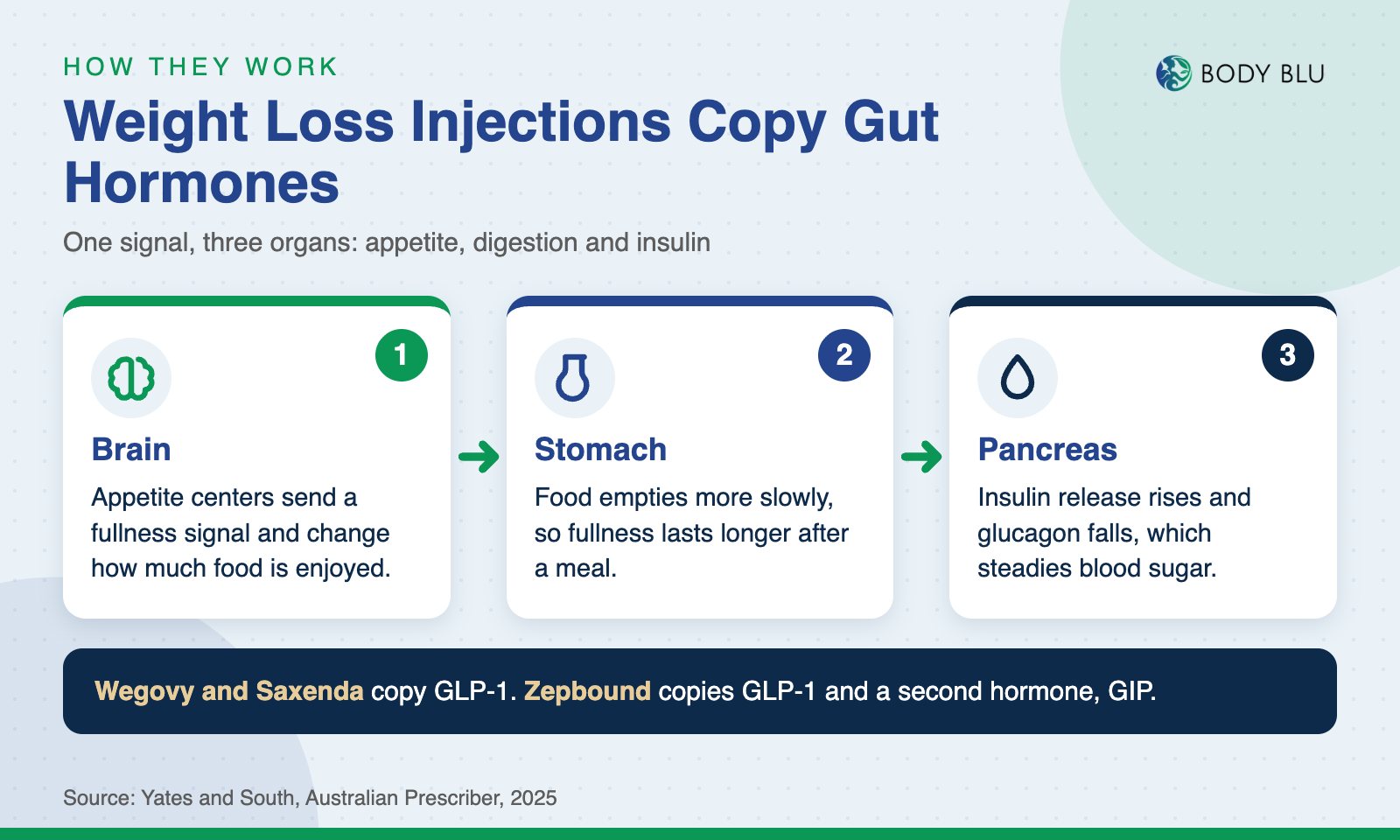
The graphic above maps each hormone action to its organ. These actions explain why the injections began as diabetes drugs. The same actions also explain the weight loss numbers in the next section.
How Much Weight Can Weight Loss Injections Help You Lose?
Weight loss injections produced average losses of 8.0% to 20.9% of body weight in the main approval trials. Every participant also received lifestyle advice, so the results combine injection and habit changes. The table lists each trial against its placebo group.
| Trial | Injection | Average loss vs placebo | Length |
|---|---|---|---|
| SCALE | Saxenda (liraglutide) | 8.0% vs 2.6% | 56 weeks |
| STEP 1 | Wegovy (semaglutide) | 14.9% vs 2.4% | 68 weeks |
| SURMOUNT-1 | Zepbound (tirzepatide), 3 dose groups | 15.0% to 20.9% vs 3.1% | 72 weeks |
These trials ran for different lengths with different people, so the rows are not a direct ranking. One open-label head-to-head trial, SURMOUNT-5, compared tirzepatide with semaglutide over 72 weeks. Tirzepatide produced 20.2% average loss and semaglutide 13.7%, according to Yates and South.
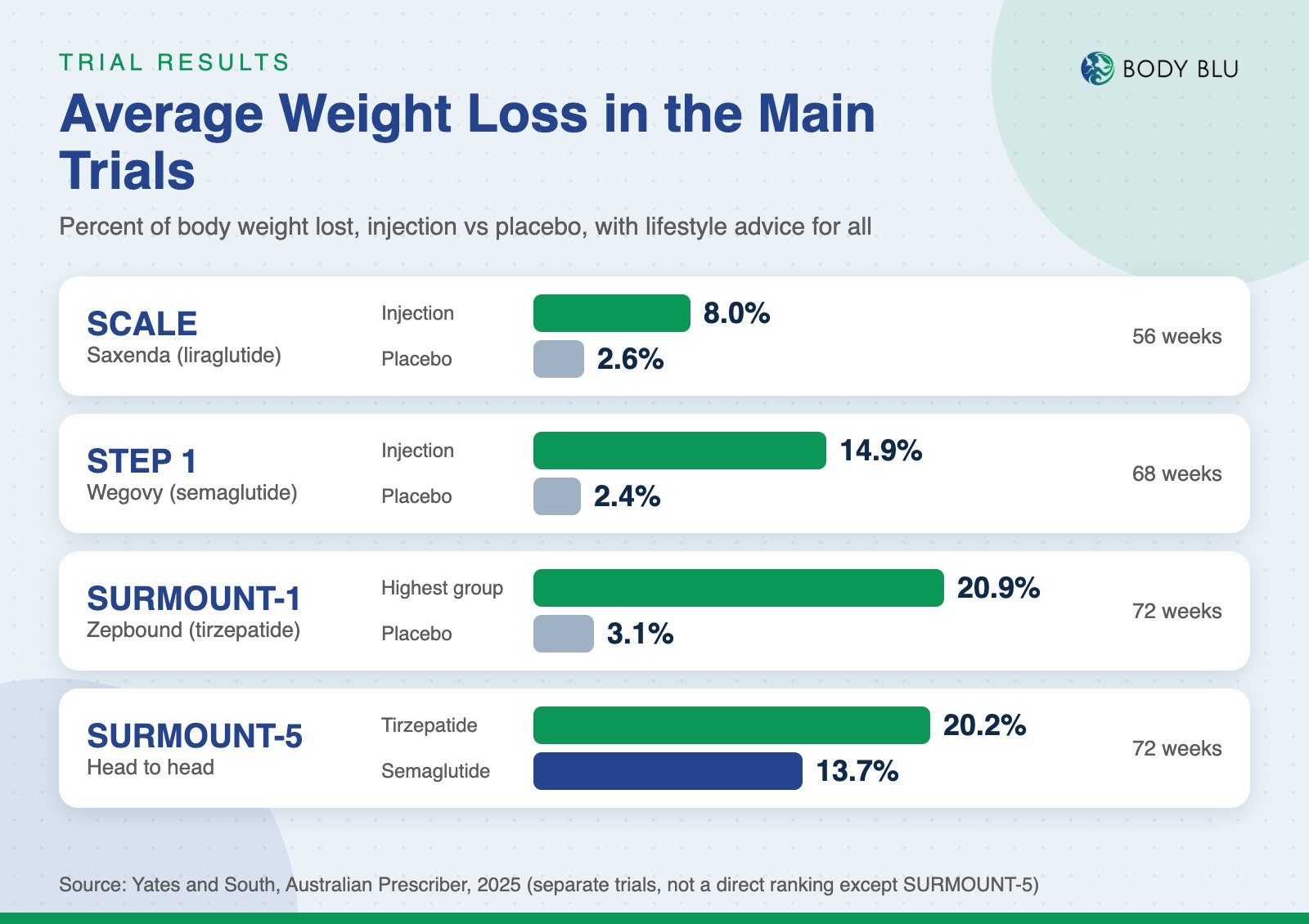
The graphic above shows the four results side by side. Response varies between people, because trial nonresponse for these drugs ran 10% to 15%. In the first semaglutide trial, 14% of participants lost less than 5% of body weight. NIDDK adds that the bulk of weight loss takes place in the first 6 months.
Are There Weight Loss Injections Not for Diabetes?
Weight loss injections not for diabetes are Wegovy, Zepbound and Saxenda, which carry weight management labels. Ozempic and Mounjaro carry type 2 diabetes labels instead. Ozempic contains semaglutide, the ingredient in Wegovy, and Mounjaro contains tirzepatide, the ingredient in Zepbound.
Medical News Today notes that a doctor may prescribe Ozempic off-label for weight loss. Off-label means the FDA has not approved that use. Weight-related blood sugar problems, such as prediabetes, call for their own prediabetes evaluation before any drug choice.
Wegovy and Zepbound also carry extra approved uses. Wegovy lowers the risk of major cardiovascular events in adults with heart disease and obesity or overweight. Zepbound treats moderate to severe obstructive sleep apnea in adults with obesity. Safety information follows next, because every injection above shares class-wide risks.
How Safe Are Weight Loss Injections?
Weight loss injections carry digestive side effects at rates well above placebo, according to their FDA labels. Nausea affected 44% of adults on Wegovy, against 16% on placebo. The label figures below compare each drug with placebo.
- Wegovy: nausea 44% vs 16%, diarrhea 30% vs 16%, vomiting 24% vs 6%, constipation 24% vs 11%.
- Zepbound: nausea 25% to 29% across three dose groups vs 8% on placebo.
- Saxenda: nausea 39.3% vs 13.8% on placebo.
Yates and South add that these drugs may raise the risk of pancreatitis and gallstones. Between 6% and 13.5% of trial participants stopped treatment, mainly over digestive, biliary, eye and mental health effects. Wegovy, Zepbound and Saxenda each carry a boxed warning about thyroid C-cell tumors seen in rodents.
Do Weight Loss Injections Cause Hair Loss?
Hair loss is a listed adverse reaction on the Wegovy and Zepbound labels. Wegovy trials recorded hair loss in 3% of adults, against 1% on placebo. Zepbound trials recorded 4% to 5% across three dose groups, against 1% on placebo.
Searches for weight loss injections hair loss reflect these label findings. Yates and South warn that weight loss can worsen micronutrient deficiencies. A baseline review of nutrient status therefore belongs in any treatment plan.
Who Should Not Take Weight Loss Injections?
People who should not take weight loss injections include those with a thyroid cancer history. The Wegovy label bars use with a personal or family history of medullary thyroid cancer or multiple endocrine neoplasia type 2. NIDDK lists the same warning for Saxenda and Zepbound.
NIDDK also advises against weight medications during pregnancy or while planning a pregnancy. Yates and South flag eating disorders as a risk, because appetite suppression can lead to poor nutrition. A provider screens for each of these conditions before prescribing.
Which Is the Safest Weight Loss Injection?
No label names a safest weight loss injection, because safety depends on each person's history. Each drug carries similar digestive effects and the same boxed warning. Approved products are not subject to the compounding concerns covered next.
Are Compounded Weight Loss Injections the Same as FDA-Approved Ones?
Compounded weight loss injections are not FDA-approved, and the FDA does not review them for safety, effectiveness or quality. The agency says compounded drugs should be used only when a patient's medical need cannot be met by an approved drug. FDA's drug shortage database lists both semaglutide injection and tirzepatide injection as resolved.
The FDA tracks harm from these products. As of May 31, 2026, it had received 990 adverse event reports for compounded semaglutide and more than 730 for compounded tirzepatide. Federal law does not require state-licensed pharmacies that are not outsourcing facilities to report these events. The FDA therefore considers the reports likely underreported.
The FDA describes several specific problems. Dosing errors from self-measured vials may explain reports of adverse events, some requiring hospitalization. Retatrutide and cagrilintide cannot be used in compounding under federal law. The FDA has also warned companies that illegally sold unapproved products falsely labeled for research purposes.
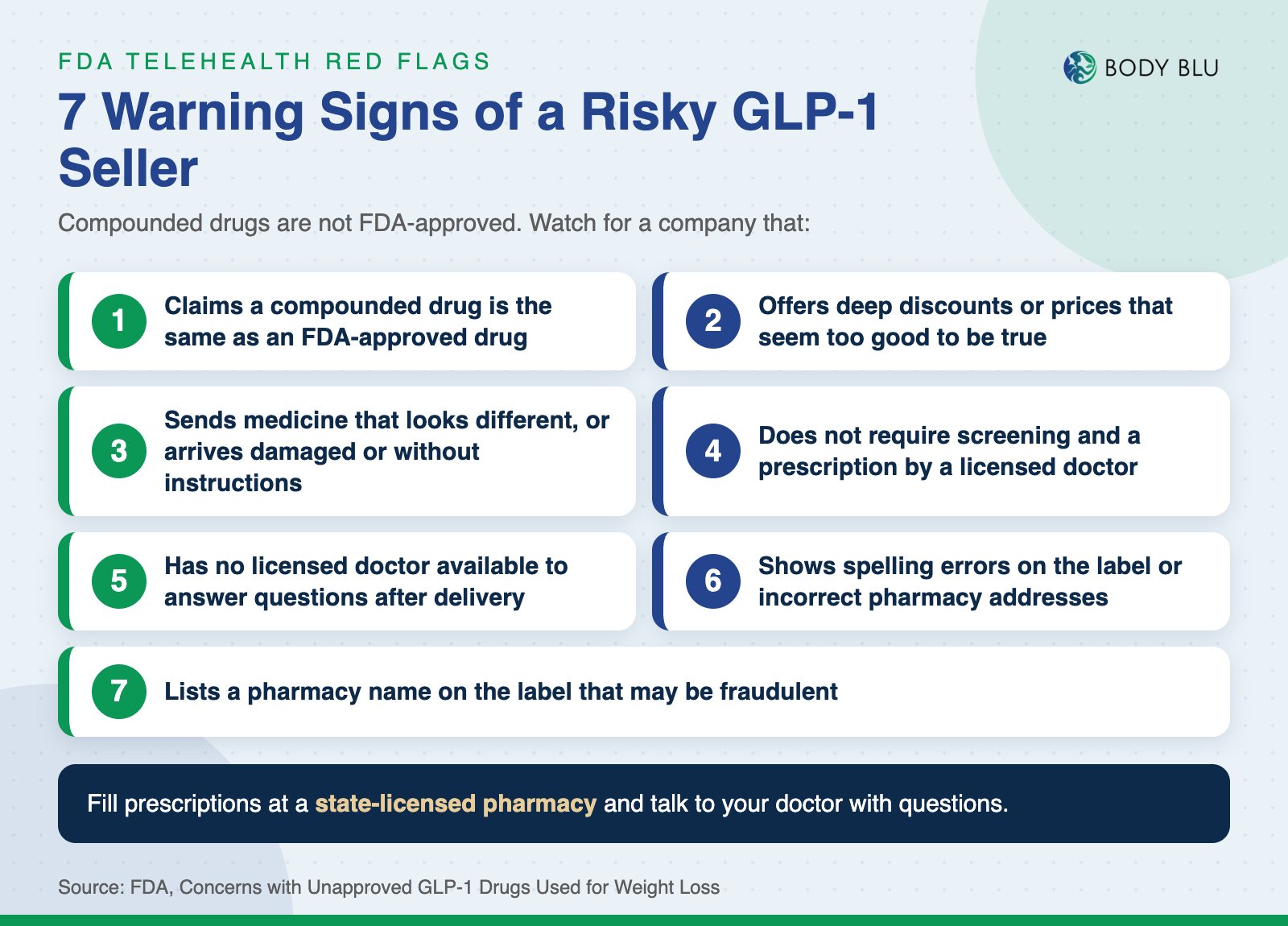
The graphic above lists the seven telehealth red flags the FDA names. The FDA also advises filling prescriptions at a state-licensed pharmacy. Counterfeit Ozempic has appeared in the US market as well.
Do Vitamin Injections for Weight Loss Work?
Vitamin injections for weight loss lack FDA approval for weight management. NIDDK's list of FDA-approved weight medications includes no vitamin or lipotropic injection. Vitamin B12 injections treat a low B12 level, which is a separate goal from weight loss.
The hCG injection shows the same gap. The FDA states that hCG is not approved for weight loss. Its label cites no substantial evidence of weight loss beyond calorie restriction. Programs that pair hCG with a 500-calorie diet risk gallstones and electrolyte imbalance.
Our team offers B12 shots for people with low B12 levels, not as a weight loss drug. The steps for starting an approved injection come next.
How Do You Get Weight Loss Injections?
Getting weight loss injections starts with a prescription from a licensed provider after a health review. NIDDK sets the eligibility rule for injections for weight loss and other medications. A BMI of 30 or more qualifies. A BMI of 27 or more also qualifies with a weight-related condition, such as high blood pressure or type 2 diabetes.
- Confirm BMI and any weight-related conditions with a provider.
- Share health history, including thyroid cancer, pancreatitis, pregnancy plans and eating patterns.
- Complete baseline lab work chosen by the provider.
- Review the approved options and the monitoring plan.
- Schedule follow-ups for side effects, nutrition, mood and muscle maintenance.
Yates and South describe the same sequence: thorough assessment, regular monitoring and support from a multidisciplinary team. Providers order baseline labs to show nutrient gaps and metabolic markers before treatment starts. Those results guide the choice of drug and the follow-up schedule for side effects, nutrition and mood. Each result is reviewed with the patient before the first injection.
A functional medicine doctor keeps those results connected to the treatment plan and the follow-up visits.
What Else Should You Know About Weight Loss Injections?
What Happens When You Stop Weight Loss Injections?
Stopping weight loss injections leads to regain of lost weight. In the STEP 1 follow-up, the share with 5% or more loss fell from 86.4% to 48.2% within 12 months. The placebo group fell from 31.5% to 22.6%.
NIDDK states that weight regain is probable after stopping. Yates and South report that weight may return as more fat than muscle. Muscle training and steady habits therefore matter during and after treatment.
What Are the Best Weight Loss Injections for Women?
The best weight loss injections for women are the same FDA-approved products listed for adults. The approved indications name adults, not a sex. Hormone shifts add context for women in midlife. A provider reviews those shifts alongside weight, as part of midlife hormone care.
What Are the Best Weight Loss Injections for Men?
The best weight loss injections for men are also the FDA-approved products listed for adults. Testosterone levels are a separate question from drug choice. Men with low energy and weight gain can ask a provider about andropause care during the same visit.
Do Weight Loss Injections Replace Diet and Exercise?
Weight loss injections do not replace healthy eating and physical activity, according to NIDDK. Trial participants all received lifestyle advice. NIDDK cites federal guidance of at least 150 minutes of moderate aerobic activity weekly, plus muscle-strengthening on 2 days.
Seasonal eating shifts can strain any plan. Our holiday weight tips cover evidence-based habits for those months.
How Does Body Blu Help With Weight Loss Injections?
Body Blu offers GLP-1 therapy through its medical weight loss program and reviews each plan with the patient in a consult. Treatment follows each patient's goals and response, with ongoing support. The program works alongside labs and nutrition review rather than replacing them.
Patients at the Cardiff clinic can start with a weight loss consult to discuss fit, labs, nutrition and monitoring. The visit also covers side-effect support. A plan for the weeks after any treatment change is set at the same time, so follow-up stays on schedule.
Our provider, a licensed naturopathic doctor, reviews health history and lab results before any plan begins. Thyroid history, pregnancy plans and eating patterns all shape the choices discussed. Each step is explained in plain language, with time for questions.
Patients comparing the best weight loss injections can send questions through the booking page at any time. The care team replies with scheduling options and next steps. Questions about labs, side effects or the FDA status of a product are welcome before any appointment is booked.
Questions about the program also reach the Body Blu naturopaths by phone at (760) 452-8527.


Resources
From Our Blog
Naturopathic insights, wellness tips, and updates from the Body Blu team.

Treatments
What Is BPC-157 Peptide and What Does BPC-157 Peptide Do?
BPC-157 peptide is a lab-made chain of 15 amino acids that the FDA has not approved for any use. Evidence comes mainly from animal studies, and only 3 small human studies exist.

Treatments
BPC 157 Side Effects and BPC 157 Peptide Side Effects for Women
BPC 157 side effects reported by users include injection-site pain, fatigue and anxiety, but only 3 small human studies exist. The FDA has not approved BPC-157, so risks remain unknown.

Treatments
Sermorelin Before and After Results for Face, Women and Men
Sermorelin before and after changes in studies are small, slow and measured in blood tests. Trials of 11 to 19 adults found higher IGF-1 within 2 weeks, but no change in body weight.