


Epstein Barr Virus Symptoms in Adults and Signs of Epstein Barr


Epstein Barr virus symptoms in adults include fatigue, fever, sore throat, swollen neck glands and rash, according to the CDC. Mono symptoms appear 4 to 6 weeks after infection and improve within 2 to 4 weeks. Fatigue can last several weeks or months. An antibody blood test confirms the infection, and a provider reviews any symptoms that last longer.
Key Takeaways
- The CDC lists 7 symptoms of Epstein-Barr virus (EBV), starting with fatigue and fever.
- Typical mono symptoms appear 4 to 6 weeks after infection and improve in 2 to 4 weeks.
- Fatigue can last several weeks or months, and symptoms occasionally last 6 months or longer.
- Reactivation does not always cause symptoms, according to the CDC.
- Trouble breathing or swallowing needs urgent medical care, according to the NHS.
What Are the Symptoms of Epstein Barr Virus in Adults?
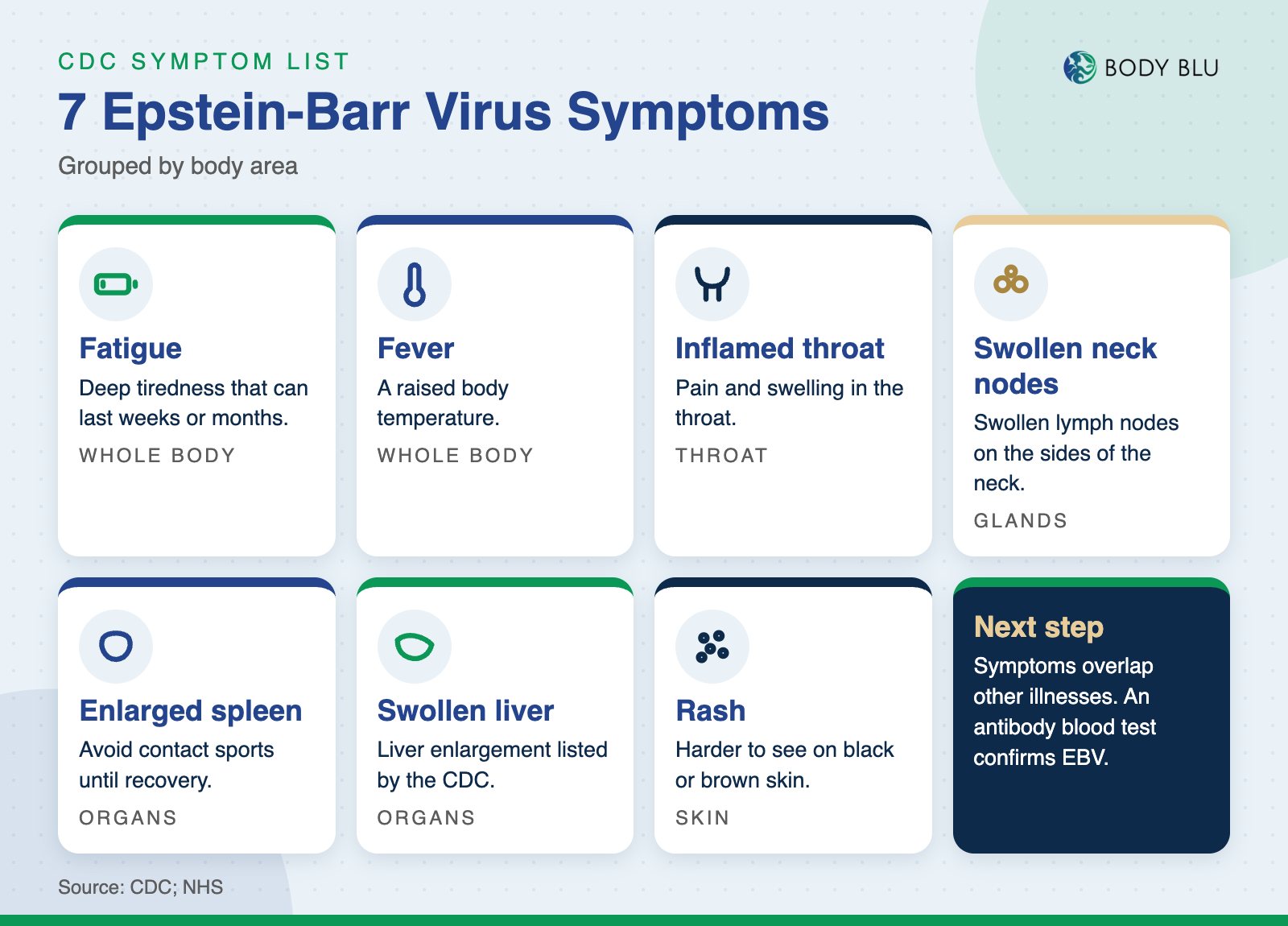
EBV symptoms in adults are a mix of fatigue, fever, throat, gland, organ and skin changes, according to the CDC. The CDC lists 7 symptoms of EBV infection. The list below follows the CDC order.
- Fatigue
- Fever
- Inflamed throat
- Swollen lymph nodes in the neck
- Enlarged spleen
- Swollen liver
- Rash
The graphic below sorts the 7 symptoms by body area, from throat and glands to organs and skin.
The NHS adds headache to its glandular fever symptoms. Glandular fever is the UK name for mono. The NHS reports that glandular fever is most common at ages 15 to 24.
The CDC states that EBV symptoms resemble other illnesses, so diagnosis can be challenging. We review these symptoms next to antibody results as part of chronic fatigue evaluation. That pairing separates EBV from other causes of exhaustion, and timing separates it further.
How Long Do Epstein Barr Virus Symptoms Last?
Epstein Barr virus symptoms last 2 to 4 weeks for most people, according to the CDC. Some people feel fatigue for several more weeks or months. The CDC adds that symptoms occasionally last 6 months or longer. The NHS states that most people recover with no problems.
Symptoms start late. The CDC states that typical mono symptoms appear 4 to 6 weeks after infection and may develop slowly. The NHS reports that a person can spread the virus for up to 7 weeks before symptoms begin.
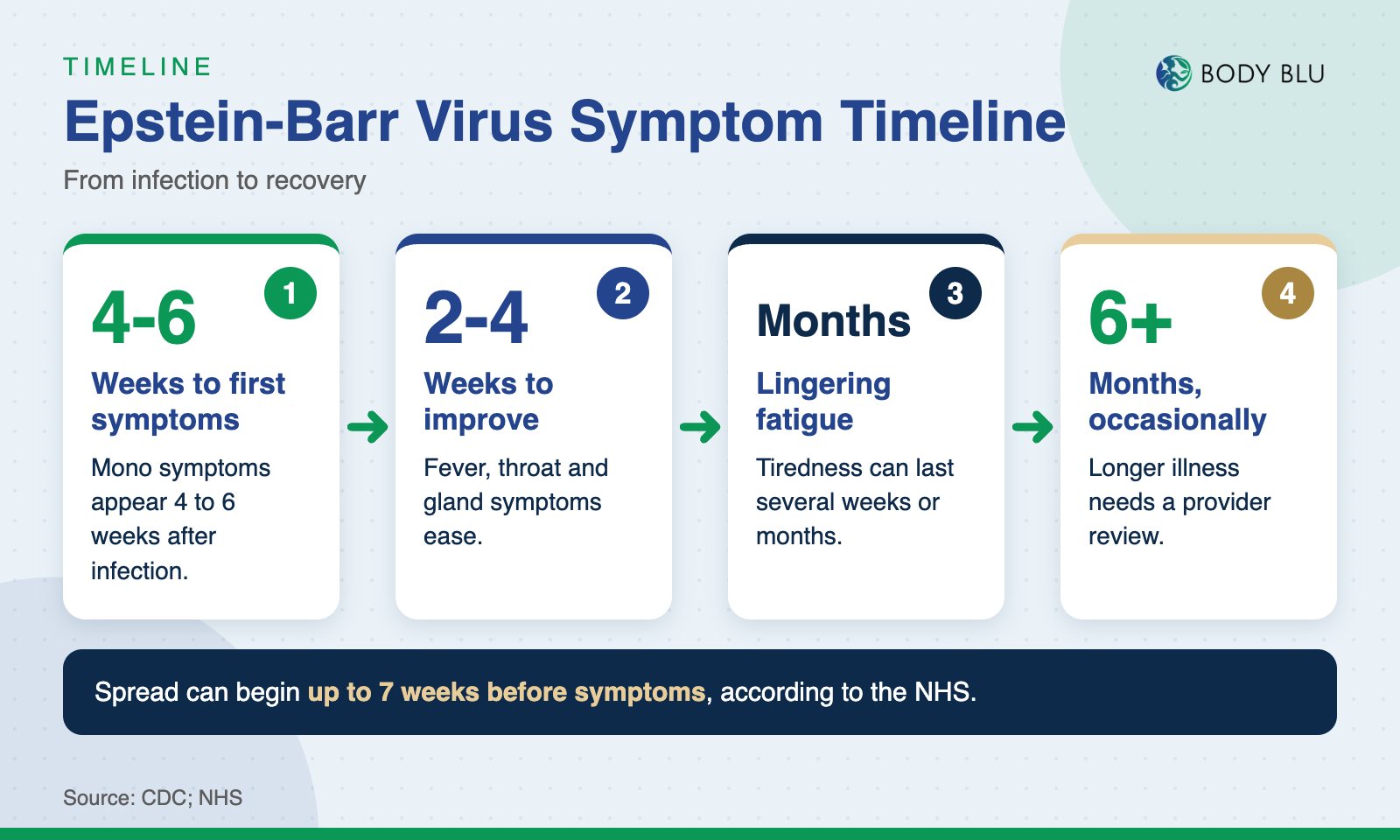
The table below lays out the timeline from infection to recovery.
| Stage | Time Frame | What Happens | Source |
|---|---|---|---|
| Before symptoms | Up to 7 weeks | The virus can spread in saliva before illness starts | NHS |
| First symptoms | 4 to 6 weeks after infection | Symptoms develop slowly | CDC |
| Improvement | 2 to 4 weeks | Most people get better | CDC |
| Lingering fatigue | Several weeks to months | Tiredness continues after other symptoms ease | CDC |
| Prolonged illness | 6 months or longer, occasionally | Symptoms continue and need a provider review | CDC |
Fatigue is the symptom that outlasts the others, and the timeline shows why recovery varies. The graphic below repeats the 4 main stages.
Some adults notice a rash within that timeline. Rash draws its own questions.
Does Epstein Barr Virus Cause a Rash?
Yes, EBV can cause a rash, because the CDC, the NHS and Cleveland Clinic all list rash among the symptoms. The NHS notes that a rash may be harder to see on black or brown skin. The sources give no further detail on rash type or timing.
A new rash with fever or swollen glands deserves a provider visit. Antibiotics do not work against a virus, according to the NHS, so a provider decides which medicine is appropriate. Rash is one of several signs of Epstein Barr virus, and some signs need faster care.
What Are the Signs of Epstein Barr Virus That Need Medical Attention?
The signs of Epstein Barr virus that need medical attention are trouble breathing, trouble swallowing and severe pain. The NHS lists breathing and swallowing difficulty as urgent. Cleveland Clinic advises an immediate visit for severe pain or a fever lasting several days.
The NHS describes 3 levels of response for glandular fever. The steps below follow that order.
- Contact a provider for a very high temperature, neck swelling on both sides, extreme tiredness or a sore throat that persists.
- Seek urgent care for difficulty breathing or pain when swallowing.
- Call emergency services for severe breathing difficulty or when you cannot swallow your own saliva.
An enlarged spleen needs separate care. The CDC advises avoiding contact sports until recovery, because an enlarged spleen can rupture. Cleveland Clinic gives the same warning about excessive physical activity. Recovery that stalls past the normal window points toward chronic illness.
What Are Chronic Epstein Barr Virus Symptoms?
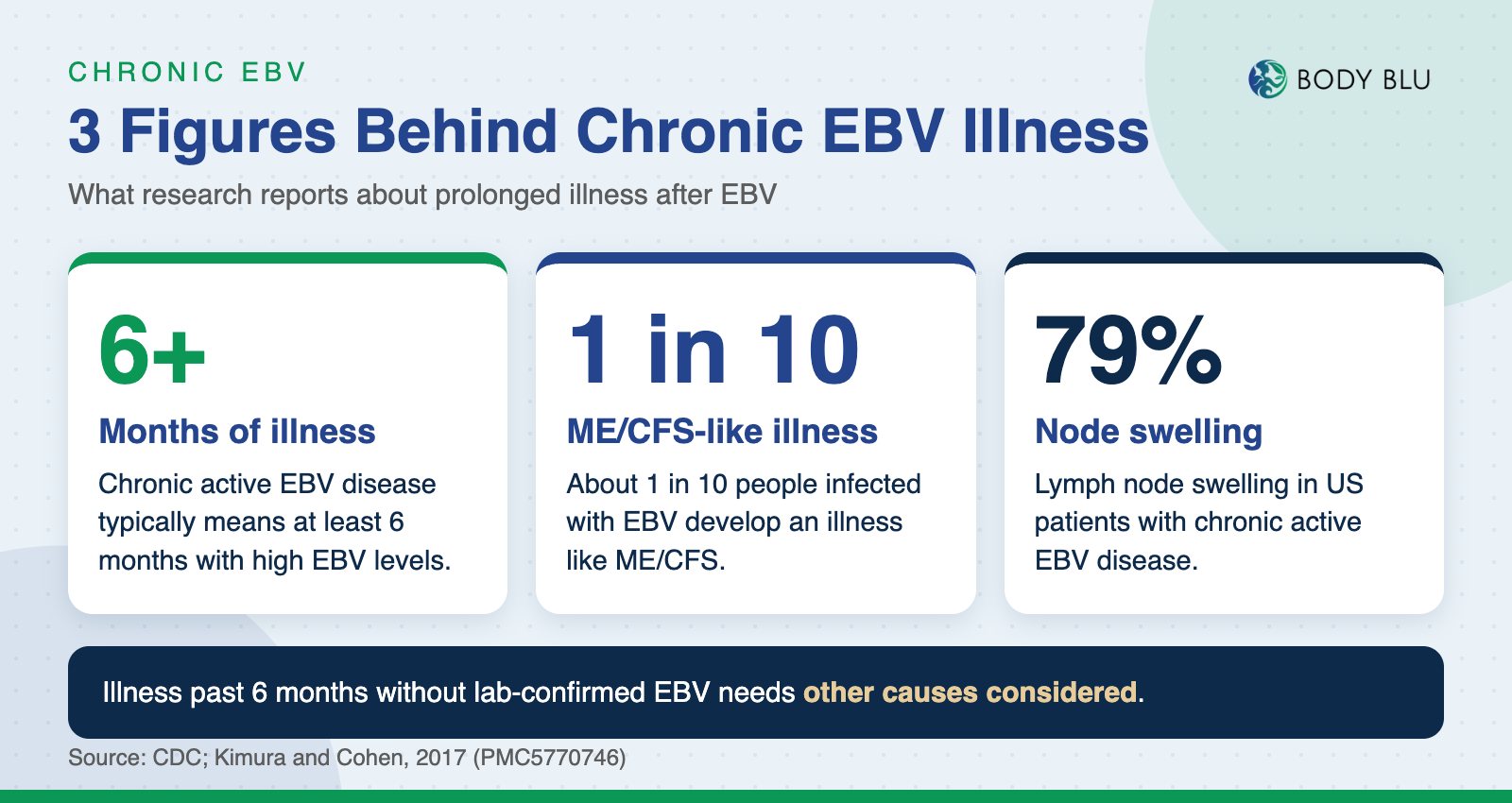
Chronic EBV symptoms are illness lasting at least 6 months with proven high EBV levels, a condition called chronic active EBV disease. A 2017 review in the NIH PubMed Central library gives that definition and adds that patients have no known immune deficiency. The review lists fever, swollen lymph nodes, enlarged spleen and EBV hepatitis as common signs.
The same review reports signs in US patients with chronic active EBV disease. Lymph node swelling appeared in 79%, enlarged spleen in 68%, fever in 47% and rash in 21%. The mean age at onset in the US series was 19 years, and onset ranged from 4 to 51 years.
The review reports higher frequency in Asians and in people from South America, Central America and Mexico. The review describes the untreated disease as progressive. A provider should therefore review any illness that persists past 6 months.
Fatigue after EBV follows a different path. The CDC reports that about 1 in 10 people infected with EBV develop an illness like myalgic encephalomyelitis/chronic fatigue syndrome (ME/CFS). The CDC adds that ME/CFS-like illness is especially likely after severe symptoms. The CDC also advises that illness beyond 6 months without lab-confirmed EBV needs other causes considered. We use EBV antibody testing to sort these patterns.
The graphic below summarizes the 3 figures that frame chronic illness after EBV.
Chronic illness differs from reactivation, which is the return of a virus the body already holds.
What Are Epstein Barr Virus Reactivation Symptoms?
Epstein Barr virus reactivation symptoms are not always present, because the CDC states that reactivation does not always cause symptoms. The virus becomes latent, or inactive, after the first infection. The CDC page lists no separate symptom set for reactivation.
Cleveland Clinic names 3 reactivation triggers: stress, a weak immune system, and menopause or hormone changes. The CDC adds that people with weakened immune systems are more likely to develop symptoms. Patients describe these episodes as epstein barr virus flare symptoms, yet no agency defines a separate flare. Menopause is one trigger, and our menopause care addresses those hormone changes.
Research links reactivation markers to long-lasting fatigue after COVID-19. A 2025 study found reactivation markers in 28.6% (40 of 140) of people with persistent post-COVID fatigue. Recovered controls showed markers in 11.3% (9 of 80). The design shows association, not cause. We evaluate this fatigue pattern within post-viral syndrome care. Several other points about these symptoms help place the list in context.
What Else Should You Know About Epstein Barr Virus Symptoms?
Why Do EBV Symptoms Overlap With Other Conditions?
EBV symptoms overlap with other conditions because fatigue, fever and swollen glands have many causes. The CDC confirms EBV infection with a blood test that detects antibodies. Timing matters for the result.
The CDC reports that anti-VCA IgM usually disappears within 4 to 6 weeks. Antibody to EBNA appears 2 to 4 months after symptoms begin. Antibodies to both VCA and EBNA suggest past infection, and over 90% of adults have been infected.
The CDC adds that elevated levels may persist for years and do not show recent infection. Our antibody lab work reads these patterns beside other results.
Providers also rule out other causes of fatigue before attributing symptoms to EBV. Thyroid problems are one example, and the Hashimoto's thyroiditis pattern is a 2nd. Hormone and stress-axis patterns such as adrenal fatigue are also checked beside EBV results.
Can You Spread EBV Without Symptoms?
Yes, you can spread EBV before symptoms appear, because the CDC states that a new infection spreads for weeks, even before symptoms. The virus travels in saliva through kissing, shared drinks and food, and shared cups, utensils or toothbrushes. The CDC reports no vaccine against EBV.
Reactivation adds a second route. The CDC states that a reactivated virus can potentially infect others no matter how much time has passed. Cleveland Clinic notes that the reactivated virus may be contagious without symptoms.
What Complications Can EBV Symptoms Cause?
EBV symptoms cause few complications in most people, because the NHS states that most people get better with no problems. The NHS lists the complications that do occur. They include hepatitis, heart inflammation, low platelet counts and Bell's palsy. The list also names a ruptured spleen and long-term tiredness lasting several months.
Each complication has its own warning signs, so unusual pain, breathing changes or weakness call for prompt care. Management of EBV itself is supportive, and treatment deserves a closer look.
Is There Treatment for Epstein Barr Virus?
Epstein Barr virus symptoms treatment is supportive care only, because the CDC reports no specific treatment for EBV. The CDC recommends fluids, rest and over-the-counter medicine for pain and fever. The NHS adds that antibiotics do not work against glandular fever.
Prolonged symptoms need a provider review. Talk to your provider before starting any supplement or medicine for EBV symptoms.
Is EBV Linked to Multiple Sclerosis?
EBV is linked to multiple sclerosis (MS) in one large 2022 military study. The study followed more than 10 million young adults and counted 955 MS cases. Risk of MS rose 32-fold after EBV infection, according to Harvard T.H. Chan School of Public Health.
About 95% of US adults get EBV, according to Cleveland Clinic. The finding does not mean that a person with EBV symptoms will develop MS. People with autoimmune disease concerns can discuss the research with a provider.
Who Gets EBV Symptoms?
Epstein Barr virus mononucleosis symptoms develop in at least 1 in 4 infected teenagers and young adults, according to the CDC. The CDC reports that infections in children usually cause no symptoms. The NHS places the peak at ages 15 to 24.
The CDC adds that people with weakened immune systems may develop more severe symptoms. Cleveland Clinic reports that about 50% of US children up to age 5 are infected. The infection reaches about 95% of US adults. The CDC adds that about 9 out of 10 adults have antibodies showing a current or past infection.
How Does Body Blu Help With Epstein Barr Virus Symptoms?
Body Blu helps with EBV symptoms through testing of EBV antibody patterns beside immune, adrenal and nutrient status. We build each plan around your history and lab results. Our chronic fatigue care covers prolonged tiredness after viral illness.
Brain fog can join long fatigue after a viral illness. Patients report poor concentration, slow recall and mental tiredness during that period. We address that pattern through brain fog care. Each visit starts with your symptom history, your timeline and any earlier lab results. Those details guide which tests make sense and in what order.
Talk to your provider about any symptom that lasts past 4 weeks, worsens or returns. You can schedule a visit when you are ready to review your history. Bring a written list of dates, symptoms and prior results.
Our team works with root-cause care for fatigue and viral illness, and the Body Blu homepage lists every service. Explore Body Blu care to see how the clinic approaches long-term wellness.


Resources
From Our Blog
Naturopathic insights, wellness tips, and updates from the Body Blu team.

Treatments
What Is BPC-157 Peptide and What Does BPC-157 Peptide Do?
BPC-157 peptide is a lab-made chain of 15 amino acids that the FDA has not approved for any use. Evidence comes mainly from animal studies, and only 3 small human studies exist.

Treatments
BPC 157 Side Effects and BPC 157 Peptide Side Effects for Women
BPC 157 side effects reported by users include injection-site pain, fatigue and anxiety, but only 3 small human studies exist. The FDA has not approved BPC-157, so risks remain unknown.

Treatments
Sermorelin Before and After Results for Face, Women and Men
Sermorelin before and after changes in studies are small, slow and measured in blood tests. Trials of 11 to 19 adults found higher IGF-1 within 2 weeks, but no change in body weight.