


Diet for Insulin Resistance and Best Foods for Insulin Resistance
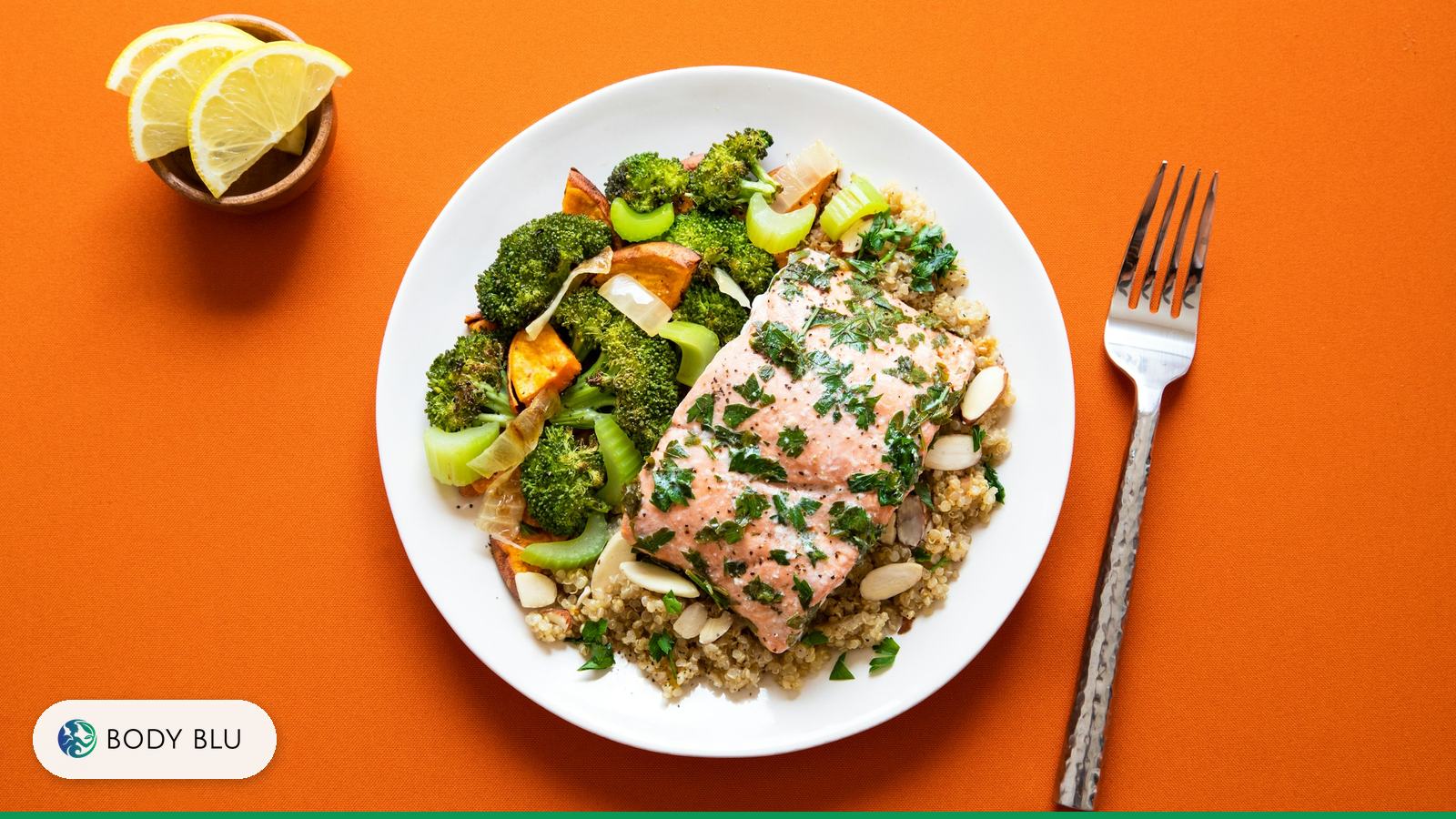

A diet for insulin resistance centers on vegetables, fiber-rich whole foods, beans, fish and nuts. The same diet limits sugary drinks, refined grains and ultra-processed foods. The CDC reports that 115.2 million US adults had prediabetes in 2023. This guide covers the best foods for insulin resistance, foods to limit, how to build each plate and the research.
Key Takeaways
- The ADA and EASD consensus report states that no single eating plan fits everyone with prediabetes.
- Fiber intake of 25 g to 29 g per day showed the greatest risk reduction in a 2019 Lancet review.
- Adults with the highest sugar-sweetened beverage intake had a 26% greater type 2 diabetes risk in a 2010 meta-analysis.
- The CDC plate method fills half a 9-inch plate with nonstarchy vegetables.
- Food changes work alongside weight loss and activity, as in the Diabetes Prevention Program.
What Is a Good Diet for Insulin Resistance?
A good diet for insulin resistance is a whole-food pattern built on vegetables, fiber, beans, fish and nuts. The ADA and EASD consensus report states that no single ideal eating plan exists for people with prediabetes. The report names Mediterranean-style, low-fat and low-carbohydrate plans as patterns with solid prediabetes research.
The PREDIMED trial compared a Mediterranean-style pattern with a low-fat pattern. The ADA report cites a 30% lower relative risk of type 2 diabetes in the Mediterranean group. A 2026 meta-analysis of 9 trials with 1,337 participants found A1C fell by 0.18 percentage points. The same analysis found no significant change in HOMA-IR, a lab estimate of insulin resistance.
Evidence limits matter here. Food quality and long-term habits carry more weight than a single named plan. Body Blu reviews fasting insulin and glucose together in its metabolic health program, so food advice follows lab results.
The table below compares 3 eating patterns that have research behind them.
| Pattern | Main foods | Evidence note |
|---|---|---|
| Mediterranean-style | Vegetables, fruit, whole grains, fish, olive oil and nuts | PREDIMED reported a 30% lower relative risk of type 2 diabetes versus a low-fat pattern |
| DASH | Fruit, vegetables, low-fat dairy, whole grains, nuts and legumes | A 2019 overview of insulin resistance diets confirmed its benefits |
| Low-carbohydrate | Nonstarchy vegetables, protein and fats, with fewer starchy and sugary foods | The 2019 overview calls for long-term studies in insulin-resistant patients |
Every pattern in the table shares one base of vegetables and fiber. The next section lists those foods in detail.
What Are the Best Foods for Insulin Resistance?
The best foods for insulin resistance are nonstarchy vegetables, whole grains, beans, fish, nuts and whole fruit. A 2017 food-group meta-analysis in the European Journal of Epidemiology linked whole grains, fruit and dairy to lower type 2 diabetes risk. Studies on what foods help with insulin resistance focus on fiber, whole grains and fruit.
A 2019 Lancet review pooled 185 prospective studies and 58 trials. Risk reduction was greatest at 25 g to 29 g of fiber per day, and the certainty of evidence was moderate. Evidence for whole grains was low to moderate.
The insulin resistance diet food list below groups foods by the role each plays.
- Nonstarchy vegetables: broccoli, spinach, green beans and salad greens fill half the plate in the CDC method.
- Whole grains: oats, quinoa and brown rice digest slowly, according to Cleveland Clinic.
- Beans and lentils: a 2020 review of 18 trials found significant effects only in type 2 diabetes, with very low evidence quality.
- Fish: salmon, herring and albacore tuna supply omega-3 fatty acids, and Cleveland Clinic cites evidence that these fats reduce insulin resistance.
- Nuts and olive oil: PREDIMED used these 2 foods to supplement its Mediterranean-style pattern.
- Whole fruit: apples, pears and berries raise blood sugar more slowly than juice, according to the CDC.
- Dairy: the 2017 meta-analysis linked dairy to lower risk, and a 2019 overview found no need to exclude it.
Each food on the list replaces a food that research ties to higher risk. The next section covers the foods to limit.
Which Foods Should You Avoid With Insulin Resistance?
The foods to avoid with insulin resistance are sugary drinks, ultra-processed foods, refined grains and processed meats. Cleveland Clinic and the CDC advise limiting sugary drinks, refined grains and highly processed foods. Research adds processed meat to the 4 groups below. Cleveland Clinic also lists sweets and heavy alcohol.
- Sugary drinks: Cleveland Clinic notes that a can of soda holds about 40 grams of sugar, which equals 10 teaspoons.
- Ultra-processed foods: a 2024 BMJ umbrella review of 45 pooled analyses found a risk ratio of 1.12 for type 2 diabetes.
- Refined grains and fries: 3 more weekly servings of French fries carried a 20% higher diabetes rate in a 2025 BMJ study.
- Processed and red meat: the 2017 food-group meta-analysis linked both to higher type 2 diabetes risk.
Sugar-sweetened beverages show a clear link in cohort data. A 2010 meta-analysis of 310,819 participants found a 26% greater diabetes risk in the highest intake group. The lowest group drank none or less than 1 serving per month.
Potatoes show that preparation matters. Baked, boiled or mashed potatoes were not significantly linked to diabetes in the same BMJ study. Replacing 3 weekly servings of fried potatoes with whole grains was linked to a 17% lower risk in its meta-analysis.
These studies are observational, so they show links rather than proof of cause. The graphic below compares foods to favor and foods to limit with 3 key figures.

Knowing the foods answers part of the question. Carbohydrate choices answer the rest.
Do You Have to Give Up Carbohydrates With Insulin Resistance?
You do not have to give up carbohydrates with insulin resistance, because no ideal carbohydrate share exists for everyone. The ADA consensus report found no ideal percentage of calories from carbohydrate, protein and fat. The report bases the mix on eating patterns, preferences and metabolic goals.
Carbohydrate type shows consistent links in cohort data. Whole grains were linked to lower type 2 diabetes risk in the 2017 meta-analysis. Sugar-sweetened beverages were linked to higher risk.
Low-carbohydrate plans have a role for some adults. The ADA report calls a lower-carbohydrate plan a viable approach for select adults with type 2 diabetes not meeting glycemic targets. The 2019 overview states that long-term studies in insulin-resistant patients must confirm those results.
Glycemic index evidence is weaker than fiber evidence. The 2019 Lancet review graded certainty for glycemic index and load as low to very low. Talk to your provider before cutting carbohydrates sharply, especially when taking glucose-lowering medicines.
Carbohydrate choices fit inside each meal. The next section shows how to build the plate.
How to Eat for Insulin Resistance at Every Meal?
Eat for insulin resistance by filling half a 9-inch plate with nonstarchy vegetables, as the CDC plate method describes. The remaining half splits between lean protein and carbohydrate foods. The steps below follow that method in order.
- Fill half of a 9-inch plate with nonstarchy vegetables such as salad, broccoli or green beans.
- Fill one quarter with lean protein such as chicken, beans, tofu or eggs.
- Fill one quarter with carbohydrate foods, choosing whole grains and whole fruit.
- Drink water or unsweetened iced tea instead of juice or soda.
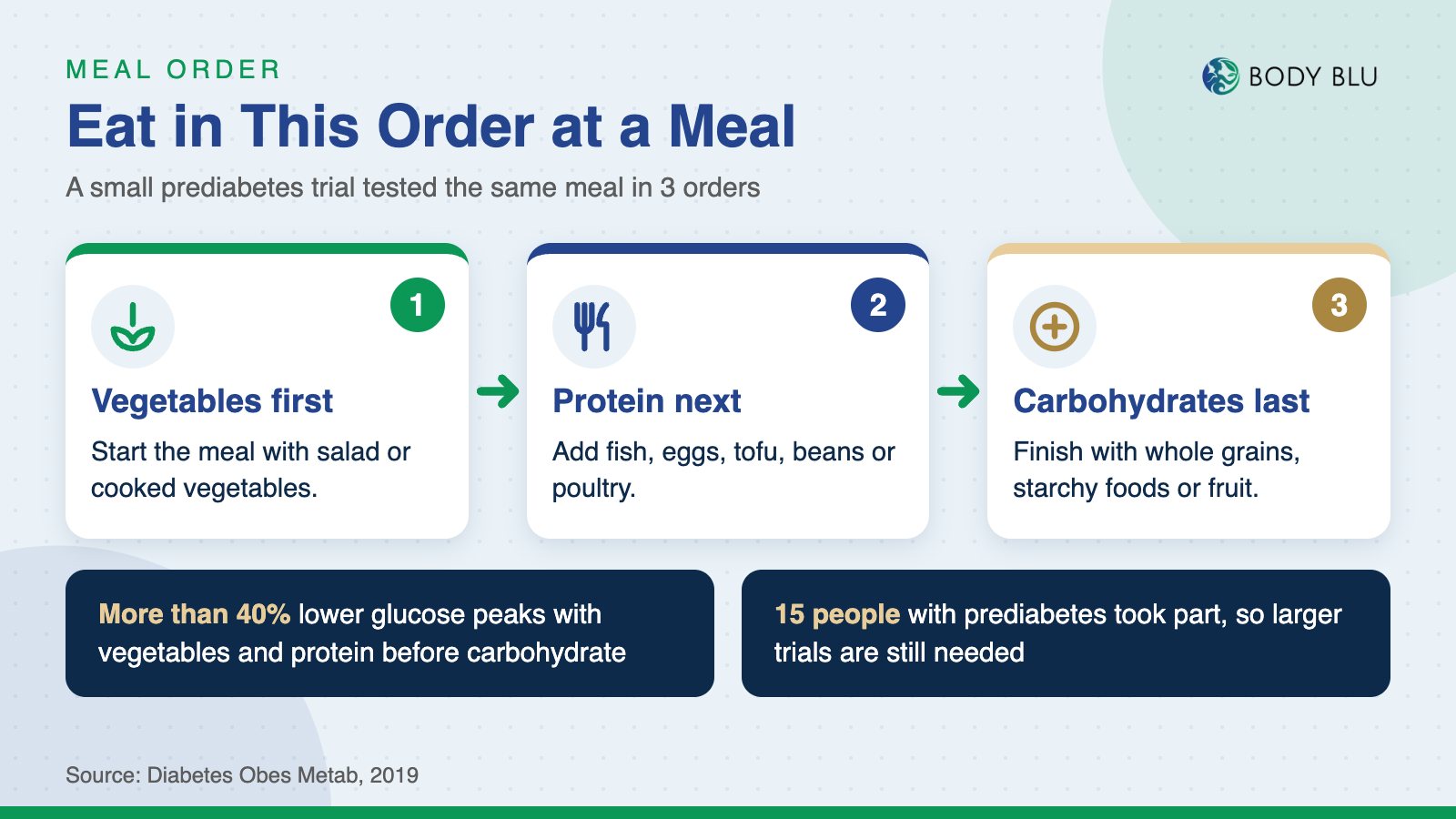
- Eat the vegetables and protein before the carbohydrate foods.
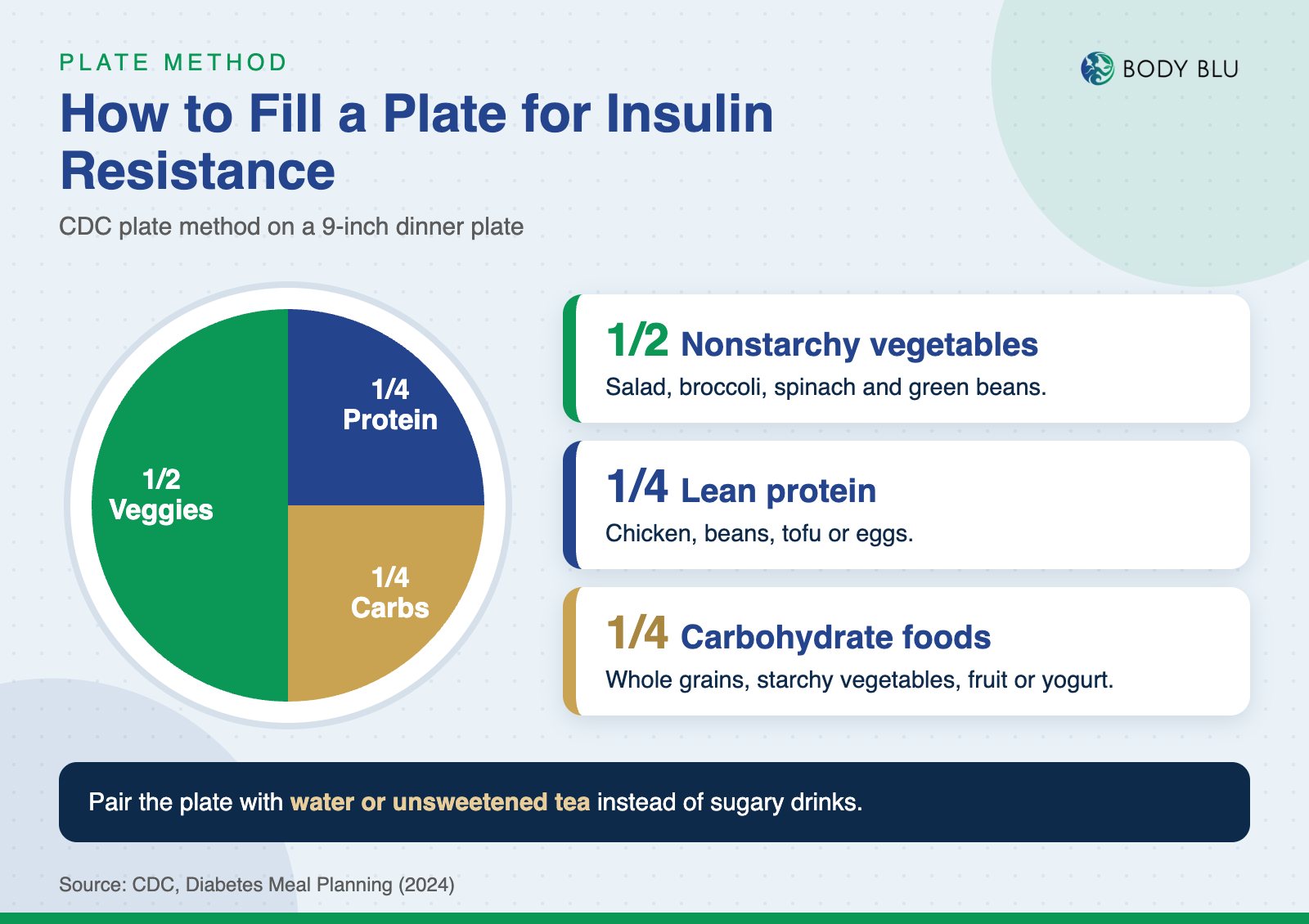
The graphic above shows the plate split as a pie. The CDC adds that carbohydrate eaten with protein, fat or fiber raises blood sugar more slowly. The same agency says that eating about the same amount of carbohydrate at each meal can help.
Step 5 comes from a 2019 crossover trial. Fifteen adults with prediabetes ate the same meal in 3 orders. Eating vegetables and protein before carbohydrate cut glucose peaks by more than 40%.
Meal order needs larger trials, because 15 participants is a small sample. The graphic below shows the order that the trial tested.
A single plate is easy to picture. A full day of meals shows how the plate repeats.
What Does a Day of Eating for Insulin Resistance Look Like?
A day of eating for insulin resistance repeats the same plate pattern at breakfast, lunch and dinner. This sample insulin resistance diet plan lists food choices and sets no calorie targets.
- Breakfast: plain yogurt with berries and walnuts.
- Lunch: lentil and vegetable soup with a side salad dressed in olive oil.
- Snack: an apple with almonds.
- Dinner: baked salmon with roasted broccoli and a small portion of quinoa.
The sample follows the Mediterranean-style foods in the PREDIMED trial. A registered dietitian or physician adjusts a plan for medicines, allergies and other conditions. The ADA consensus report recommends individualized nutrition therapy for people with prediabetes.
What Else Should You Know About Diet for Insulin Resistance?
Can Diet Reverse Insulin Resistance?
Diet improves insulin resistance, yet no study shows that food alone reverses it for everyone. A diet to reverse insulin resistance works inside a full lifestyle program. The Diabetes Prevention Program cut type 2 diabetes chance by 58% over about 3 years. That lifestyle program set a 7% weight loss goal and 150 minutes of weekly activity.
A 2019 EASD review of 7 trials with 4,090 participants found a risk ratio of 0.53 for lifestyle changes. Readers new to the condition can start with our insulin resistance explained.
Does Weight Loss Change the Food Rules?
Weight loss does not change the food rules, because a weight loss insulin resistance diet uses the same vegetables, fiber and protein. NIDDK reports that losing 5% to 7% of starting weight lowered diabetes risk in people at high risk. Supervised weight loss guidance adds monitoring to the same food pattern.
Should You Test Before Changing Your Diet?
Testing before a diet change gives a baseline, because NIDDK states that people with insulin resistance and prediabetes usually have no symptoms. An A1C of 5.7% or a fasting glucose of 100 mg/dL marks the start of prediabetes.
Symptoms alone cannot confirm the condition, as our guide to insulin resistance symptoms explains. NIDDK adds that the insulin resistance test is used primarily in research studies, so providers rely on routine labs. Providers review A1C, fasting glucose, waist size, blood pressure and lipid results.
Comprehensive functional lab panels measure insulin and glucose together. Talk to your provider before changing medicines or starting a new eating plan.
Does Alcohol Matter for Insulin Resistance?
Alcohol matters for insulin resistance when intake is heavy. Cleveland Clinic warns that too many drinks upend the body's ability to regulate insulin. A 2019 overview found that moderate alcohol within a balanced diet had no negative effect on insulin sensitivity. Ask your provider what intake fits your health and medicines.
Is the Diet Different for Women With PCOS?
The same food pattern applies to women with polycystic ovary syndrome (PCOS), who face higher metabolic risk. A 27-study meta-analysis found PCOS carried 3.35 times the odds of metabolic syndrome. Dedicated PCOS nutrition care adds hormone and cycle review to the food plan.
How Do the Holidays Fit Into the Diet?
Holiday meals fit the same plate method, because the CDC plate works at any table. Choose vegetables and protein first, then a measured portion of favorite carbohydrate dishes. Our holiday eating guide covers the season in more detail.
How Does Body Blu Help With Insulin Resistance?
We help with insulin resistance by pairing lab results with a food plan that fits your history. Dr. Joseph Scarpuzzi, ND, reviews fasting insulin and glucose together and explains which food changes match the results. Our team builds that plan inside a functional medicine plan that looks for root causes beyond food. Our review works alongside a primary care evaluation, and the evaluation stays in place.
A consultation starts with your labs and food habits, and our team explains the next steps. Patients who want structured blood sugar care can begin there.
Our Cardiff clinic reviews labs and eating habits together for adults across North County. The team explains each result in plain language before suggesting food changes. Explore all services on the Body Blu homepage to see what fits your goals.


Resources
From Our Blog
Naturopathic insights, wellness tips, and updates from the Body Blu team.

Wellness
What Causes Insulin Resistance and Does It Cause Weight Gain
What causes insulin resistance is a mix of excess belly fat, inactivity, family history, short sleep and some medicines. Insulin resistance and weight gain feed each other, but research shows the link does not run only one way.
Nutrition
Diet for Insulin Resistance and Best Foods for Insulin Resistance
A diet for insulin resistance centers on nonstarchy vegetables, fiber-rich whole foods, beans, fish and nuts, with fewer sugary drinks and ultra-processed foods. The ADA says no single eating plan fits everyone with prediabetes.

Treatments
What Is Sermorelin Peptide and What Does Sermorelin Do?
Sermorelin is a lab-made peptide that copies the first 29 amino acids of GHRH and prompts the pituitary gland to release growth hormone. FDA withdrew approval of the brand drug in 2009.