


Is Insulin Resistance Diabetes? Insulin Resistance vs Prediabetes


No, insulin resistance is not diabetes unless blood glucose also reaches the diabetes range of an A1C of 6.5% or above. Insulin resistance describes cells that respond poorly to insulin, and prediabetes affects 115.2 million U.S. adults, according to CDC. This guide answers is insulin resistance diabetes by comparing insulin resistance, prediabetes and type 2 diabetes.
Key Takeaways
- Insulin resistance is a cell response, while diabetes is a diagnosis made with blood glucose tests.
- Prediabetes affects 115.2 million U.S. adults, and 8 in 10 of them do not know it, according to CDC.
- Diabetes starts at an A1C of 6.5% or above, and prediabetes covers an A1C of 5.7% to 6.4%.
- The Diabetes Prevention Program lifestyle group lowered the chance of type 2 diabetes by 58% over about 3 years.
- Insulin resistance has no routine diagnostic cutoff, so a provider decides which tests fit.
Is Insulin Resistance Diabetes?
Insulin resistance is not diabetes, because insulin resistance describes cell response while diabetes describes high blood glucose. NIDDK defines insulin resistance as muscle, fat and liver cells that do not respond to insulin the way they should. CDC explains that the pancreas then pumps out higher levels of insulin to move glucose into those cells. Nebraska Medicine adds that glucose stays normal at first, because the extra insulin compensates.
Diabetes has fixed lab thresholds. NIDDK sets the A1C cutoff at 6.5% or above and the fasting plasma glucose cutoff at 126 mg/dL or above. The 2-hour oral glucose tolerance test (OGTT) cutoff is 200 mg/dL or above.
A second test usually confirms the result, according to NIDDK. We review fasting insulin and fasting glucose together as part of insulin resistance support.
Insulin resistance can still lead to diabetes. CDC states that insulin resistance sets the stage for prediabetes and type 2 diabetes. The next section compares insulin resistance, prediabetes and type 2 diabetes side by side.
How Do Insulin Resistance, Prediabetes and Type 2 Diabetes Compare?
Insulin resistance, prediabetes and type 2 diabetes differ in what is measured: cell response or blood glucose. Cell response defines insulin resistance, while blood glucose defines the other two. The table below compares the three conditions using NIDDK, CDC and published study figures.
| Feature | Insulin resistance | Prediabetes | Type 2 diabetes |
|---|---|---|---|
| Main difference | Cells respond poorly to insulin | Blood glucose is above normal but below the diabetes range | Blood glucose is in the diabetes range |
| Lab cutoff | No routine cutoff; the test is mainly used in research | A1C 5.7% to 6.4%; fasting glucose 100 to 125 mg/dL | A1C 6.5% or above; fasting glucose 126 mg/dL or above |
| Symptoms | Usually none | Usually none | Thirst, frequent urination and hunger; many people have none |
| Insulin picture | Pancreas makes extra insulin to compensate | Pancreas may no longer make enough insulin | Body does not make enough insulin or does not use it well |
| U.S. numbers | 40.3% of adults aged 18 to 44 without diabetes (2015-2018) | 115.2 million adults | 40.1 million people with diabetes of all types |
Insulin resistance vs diabetes is therefore a comparison of a cell response with a diagnosis. NIDDK states that the test for insulin resistance is primarily used only for research studies, so primary care relies on glucose results. The infographic below shows the three conditions as 3 cards.

CDC reports that 40.1 million people have diabetes, and more than 1 in 4 adults with diabetes do not know it. Prediabetes goes unrecognized even more, since 8 in 10 adults with prediabetes do not know they have it. Prediabetes and diabetes each have a published cutoff. The cutoffs raise the question of whether insulin resistance and prediabetes are the same condition.
Is Insulin Resistance Prediabetes?
Insulin resistance is not prediabetes, because prediabetes is a lab-defined stage and insulin resistance is a cell response that can come first. Nebraska Medicine quotes a physician who says people can have insulin resistance before a prediabetes diagnosis. The pancreas first makes extra insulin to keep glucose normal. Prediabetes appears once the pancreas can no longer overcome the resistance.
Insulin resistance vs prediabetes looks similar from the outside, because NIDDK says both usually cause no symptoms. CDC adds that nobody can tell insulin resistance by looking at a person. A blood test is how prediabetes is found. Another pair of terms, insulin sensitivity and insulin resistance, describes the cell response from opposite ends.
What Is the Difference Between Insulin Resistance and Insulin Sensitivity?
Insulin sensitivity is how well cells respond to insulin, and insulin resistance is the impaired version of that response. Cleveland Clinic notes that insulin resistance is also known as impaired insulin sensitivity. Insulin resistance vs insulin sensitivity is therefore one scale read from two ends. Cleveland Clinic adds that exercise makes the body more sensitive to insulin.
Sensitivity and resistance both describe how cells treat insulin. A third term, insulin deficiency, describes a different problem.
What Is the Difference Between Insulin Resistance and Insulin Deficiency?
Insulin deficiency means the body does not make enough insulin, while insulin resistance means the body makes insulin that cells answer poorly. CDC describes type 1 diabetes as an autoimmune condition in which the body makes no insulin or too little. Insulin resistance vs insulin deficiency therefore separates the cell problem from the supply problem. NIDDK states that in type 2 diabetes the body does not make enough insulin or does not use insulin well.
The two problems connect over time. The steps below show how insulin resistance progresses.
How Does Insulin Resistance Progress to Prediabetes and Type 2 Diabetes?
Insulin resistance progresses to prediabetes and type 2 diabetes in 5 steps that unfold over years. CDC and Nebraska Medicine describe the sequence below.
- Cells in muscle, fat and liver respond less to insulin.
- The pancreas makes extra insulin to move glucose into the cells.
- The pancreas falls behind, and blood glucose rises above normal, which is prediabetes.
- Blood glucose keeps rising because the pancreas cannot make enough insulin.
- Blood glucose reaches the diabetes range, which is type 2 diabetes.

CDC adds that full liver and muscles send leftover glucose to be stored as body fat, which causes weight gain. The Whitehall II study put timing on these steps. Tabak and colleagues followed 6,538 British civil servants without diabetes at baseline. During a median follow-up of 9.7 years, 505 of them were diagnosed with diabetes.
Insulin sensitivity fell steeply during the 5 years before diagnosis, and fasting glucose rose steeply starting 3 years before. Beta-cell function rose between years 4 and 3 before diagnosis and then fell to 62.4% by diagnosis. The pancreas therefore compensates first and falters later.
Prediabetes is the stage with published timing data. NIDDK reports that people with prediabetes have a high chance of developing type 2 diabetes within 5 to 10 years. Not everyone does, which leads to the question of whether insulin resistance means diabetes.
Does Insulin Resistance Mean Diabetes?
Insulin resistance does not mean diabetes, because not everyone with insulin resistance develops diabetes. Verywell Health notes that insulin resistance also appears with polycystic ovary syndrome, metabolic syndrome and fatty liver disease. Healthline reports that some people live with insulin resistance for years and never develop prediabetes or type 2 diabetes. NIDDK says the same about prediabetes, since not everyone with prediabetes develops type 2 diabetes.
Lifestyle changes can change the outcome. In the Diabetes Prevention Program (DPP), the lifestyle group lowered the chance of type 2 diabetes by 58% after about 3 years. NIDDK reports that the metformin group lowered the chance by 31%, and the comparison group took a placebo. The lifestyle goal was 7% weight loss plus 150 minutes of exercise per week, which our weight loss program reviews with patients.
Prediabetes is not harmless. NIDDK states that some people with prediabetes have changes in their blood vessels. Insulin resistance and prediabetes can also bring high blood pressure and unhealthy cholesterol and triglyceride levels. Our prediabetes plan looks at glucose and insulin together.
The DPP Outcomes Study kept following the participants. NIDDK reports that lifestyle changes or metformin prevented or delayed type 2 diabetes for at least 15 years. A provider decides whether medicine belongs in a plan. Blood tests show which stage applies, so the next section covers the test ranges.
How Do Blood Tests Separate Insulin Resistance From Diabetes?
Blood tests separate insulin resistance from diabetes through glucose cutoffs that exist for prediabetes and diabetes but not for insulin resistance. NIDDK lists three glucose tests: the A1C test, the fasting plasma glucose (FPG) test and the 2-hour OGTT. The infographic below and the list that follows show the ranges.
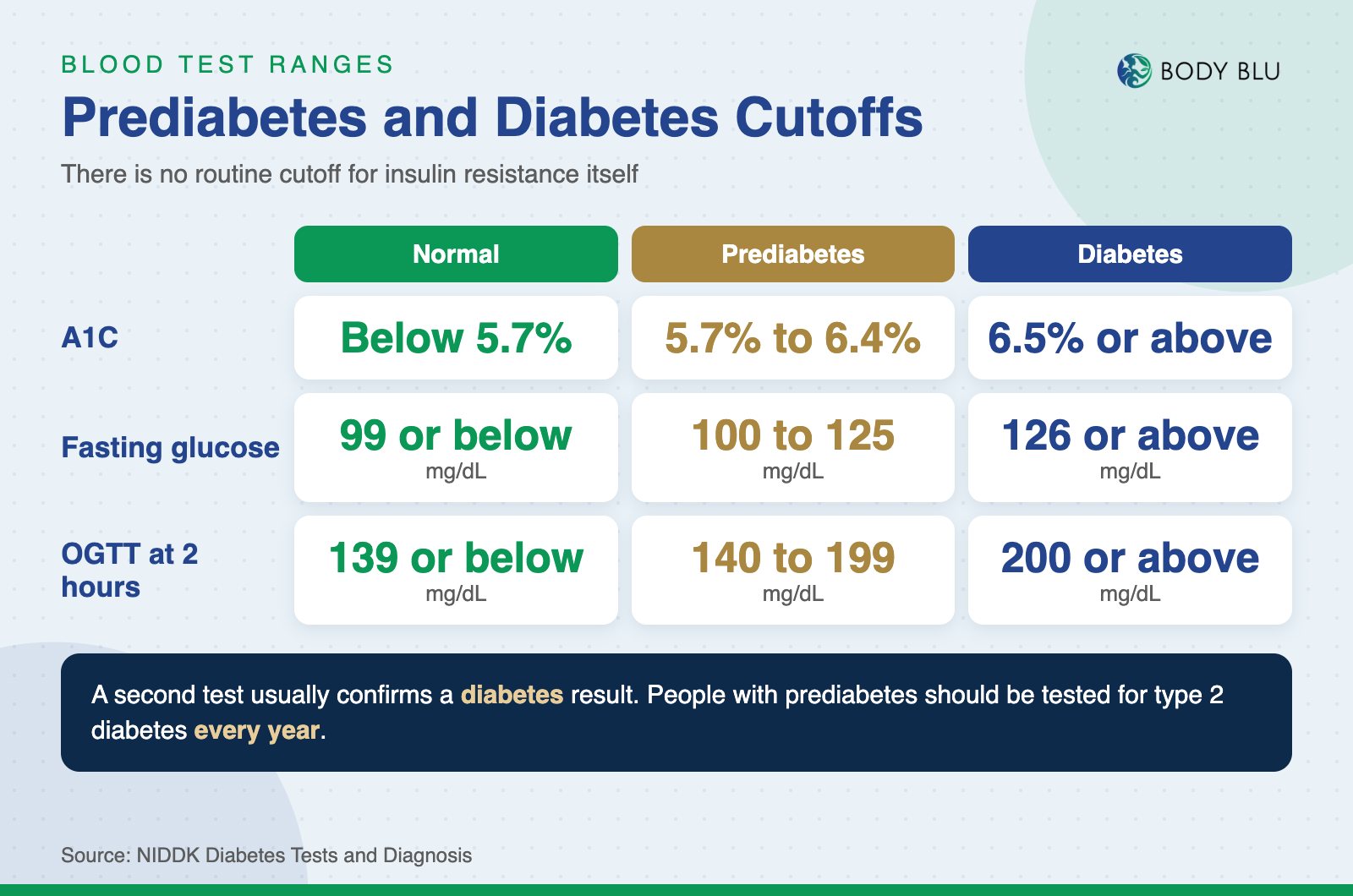
- A1C: below 5.7% is normal, 5.7% to 6.4% is prediabetes and 6.5% or above is diabetes.
- Fasting plasma glucose: 99 mg/dL or below is normal, 100 to 125 is prediabetes and 126 or above is diabetes.
- OGTT at 2 hours: 139 mg/dL or below is normal, 140 to 199 is prediabetes and 200 or above is diabetes.
The A1C test shows average glucose over the past 3 months, according to NIDDK. In people with certain health conditions, A1C may miss prediabetes. Researchers measure insulin resistance differently: Parcha and colleagues used a homeostatic model assessment for insulin resistance (HOMA-IR) value of 2.5 or more.
Testing frequency follows risk. Annual type 2 diabetes testing is advised for people with prediabetes, NIDDK says. People with risk factors but normal results may be retested at least every 3 years. We pair glucose results with insulin blood work in clinic. Side questions about insulin resistance and diabetes follow next.
What Else Should You Know About Insulin Resistance and Diabetes?
Insulin Resistance Is What Type of Diabetes?
Insulin resistance is not a type of diabetes, but insulin resistance is one cause of type 2 diabetes, according to NIDDK. CDC reports that type 2 accounts for approximately 90-95% of diagnosed diabetes cases in adults. Type 1 accounts for approximately 5-10%. Healthline notes that people with type 1 diabetes can also develop insulin resistance over time.
Who Is More Likely to Have Insulin Resistance or Prediabetes?
People with the risk factors below are more likely to have insulin resistance or prediabetes, according to NIDDK's risk factor list.
- Overweight, obesity or a large waist size.
- Age 35 or older.
- A family history of diabetes.
- Physical inactivity.
- Sleep apnea or polycystic ovary syndrome (PCOS).
- A history of gestational diabetes.
Weight is not the whole picture. Parcha and colleagues found insulin resistance in 40.3% of U.S. adults aged 18 to 44 without diabetes in 2015-2018. Nearly half of those adults were not obese. Patients with PCOS can review glucose and insulin results alongside PCOS lab work.
What Are the Symptoms of High Insulin Levels?
Insulin resistance and prediabetes usually cause no symptoms, according to NIDDK. Cleveland Clinic lists skin tags and dark velvety skin patches called acanthosis nigricans as visible changes. Our guide to warning signs covers these changes in detail.
Type 2 diabetes brings different symptoms. NIDDK lists increased thirst, increased urination and increased hunger, and says they can develop slowly over several years. Anyone with these symptoms should see a provider for testing, and patients can book an appointment with us.
How Is Insulin Resistance Linked to Metabolic Syndrome?
Insulin resistance is linked to metabolic syndrome, which NHLBI diagnoses when 3 or more of 5 measurements are present. NIDDK describes metabolic syndrome as a group of conditions that raise the risk of heart disease, diabetes and stroke. NHLBI lists the 5 measurements below.
- Waist over 40 inches in men or over 35 inches in women.
- Blood pressure of 130/85 or above.
- Fasting glucose of 100 mg/dL or above.
- Triglycerides over 150 mg/dL.
- HDL cholesterol under 40 mg/dL in men or under 50 mg/dL in women.
Can Insulin Resistance Exist With a Normal A1C?
Insulin resistance can exist with a normal A1C, because the pancreas can make extra insulin to keep glucose normal. Nebraska Medicine describes this compensation as the first phase. Our insulin resistance guide explains the process step by step. NIDDK also warns that A1C may miss prediabetes in some health conditions.
How Does Body Blu Help With Insulin Resistance?
Body Blu helps with insulin resistance through a naturopathic work-up that reads glucose, insulin and risk factors together. Dr. Joseph Scarpuzzi, ND, leads endocrine-focused care in Cardiff, California. We use functional medicine practice to look at nutrition, sleep, activity and hormones alongside lab results.
The answer to is insulin resistance diabetes stays no until glucose reaches the diabetes cutoffs. A provider should review any result, and this guide is general education.
Patients who want to talk through testing options can visit the Body Blu website or call the clinic.


Resources
From Our Blog
Naturopathic insights, wellness tips, and updates from the Body Blu team.
Wellness
Is Insulin Resistance Diabetes? Insulin Resistance vs Prediabetes
No, insulin resistance is not diabetes. It describes cells that respond poorly to insulin, while diabetes starts at an A1C of 6.5% or above. Compare insulin resistance, prediabetes and type 2 diabetes.

Wellness
What Is the Epstein Barr Virus and How Do You Know You Have It?
Epstein-Barr virus (EBV) is a common herpes family virus that infects about 95% of US adults. It spreads through saliva, and an antibody blood test shows a current or past infection.

Treatments
How to Treat Insulin Resistance and What Helps Insulin Resistance
Treat insulin resistance with lifestyle changes first: 150 minutes of weekly activity, sleep and 5% to 7% weight loss. Metformin and GLP-1 medicines add options, and supplements lack proven benefit without a deficiency.