


What Is the Epstein Barr Virus and How Do You Know You Have It?
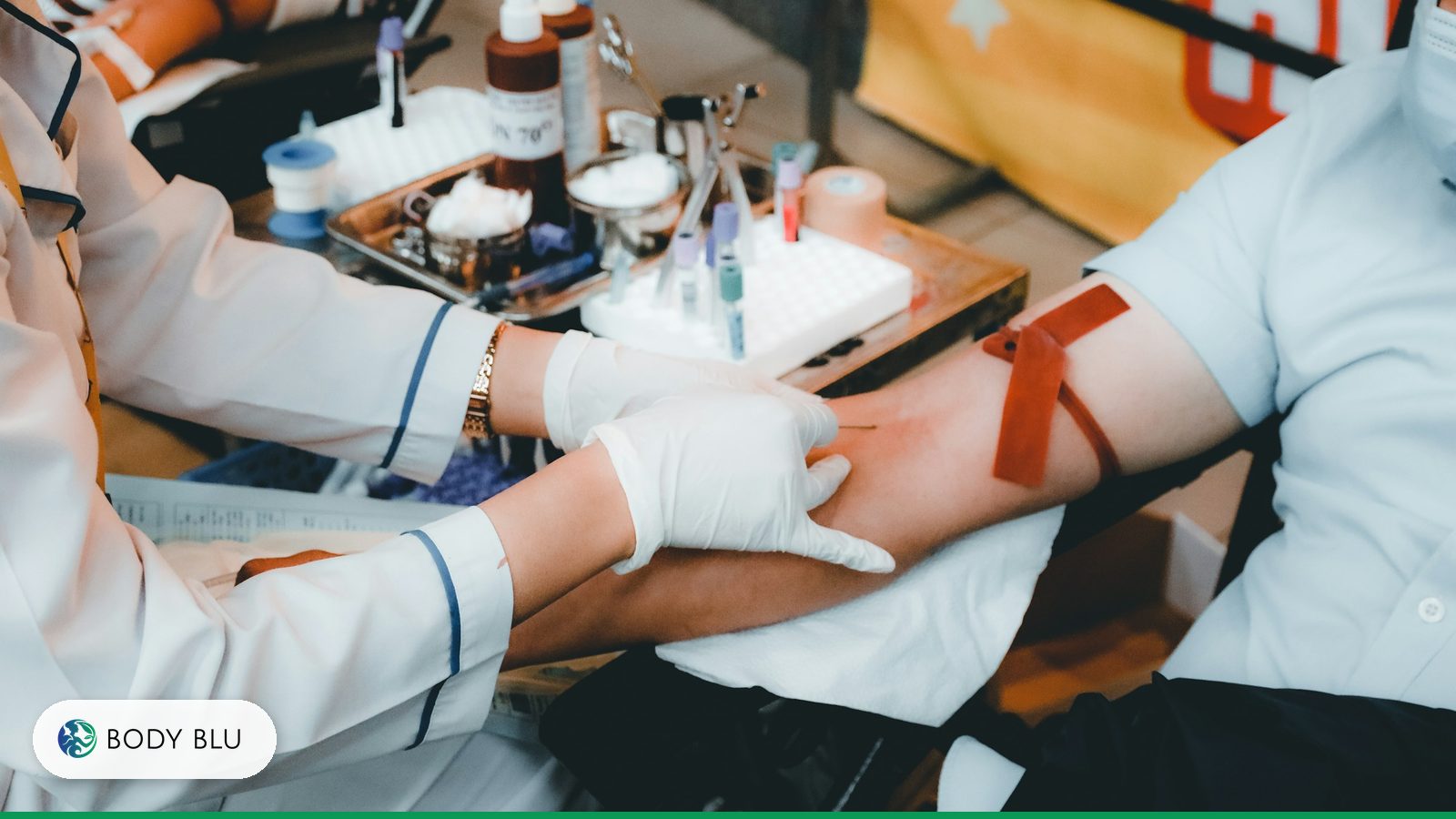

Epstein-Barr virus (EBV) is a herpes family virus that infects about 95% of US adults in their lifetime, according to Cleveland Clinic. The virus spreads through saliva, stays in the body for life and can pass without any symptoms. Providers confirm it with a blood test for antibodies. This guide covers what EBV is, how people get it and how testing works.
Key Takeaways
- EBV is a herpes family virus that infects about 95% of US adults and stays in the body for life.
- Saliva is the main route of spread, and the virus can spread up to 7 weeks before symptoms.
- A blood test for antibodies is the way providers confirm EBV, and it gives 3 possible results.
- A high antibody level does not prove a current infection, because levels can stay raised for years.
- No specific treatment or vaccine exists, so care focuses on rest, fluids and symptom relief.
What Is Epstein Barr Virus (EBV)?
EBV is a very common virus in the herpes family, also named human herpesvirus 4, according to the CDC. The virus infects B cells, a type of white blood cell. Cleveland Clinic explains that EBV attaches to these cells and stops them from fighting the infection properly. Infection in childhood usually causes no symptoms, while teens and adults can develop infectious mononucleosis, known as mono.
The virus does not leave after the first infection. EBV goes dormant, meaning inactive, and stays in the body for life, as Cleveland Clinic describes. Body Blu reviews EBV antibody patterns, immune markers, adrenal function and nutrient status as part of an Epstein-Barr evaluation. That review supports a primary care visit and does not replace one. The next question is what kind of virus EBV is.
What Type of Virus Is Epstein Barr?
Epstein Barr is a gamma herpesvirus that occurs only in humans, according to CDC laboratory guidance. Cleveland Clinic lists chickenpox, shingles and mono among the conditions in the human herpesvirus family. Cleveland Clinic also notes that EBV symptoms differ from those of genital herpes. The family tie explains the shared name, but each herpesvirus behaves differently.
How Old Is Epstein Barr Virus?
Scientists first described EBV in 1964, so science has known the virus for 62 years. Epstein, Achong and Barr reported virus particles in cultured Burkitt lymphoma cells in The Lancet on March 28, 1964. That date marks the discovery, not the start of human infection. The discovery also explains why the virus carries the names of Epstein and Barr.
How Common Is Epstein Barr Virus in Adults?
Epstein Barr virus in adults is very common, with about 95% of US adults infected at some point, according to Cleveland Clinic. The CDC reports that about 9 out of 10 adults carry antibodies showing a current or past infection. Cleveland Clinic estimates that about 50% of US children up to age 5 have already been infected.
Cleveland Clinic adds that most cases affect children, teenagers and young adults, although anyone can get the virus. The NHS reports that glandular fever, the UK name for mono, is most common at ages 15 to 24. These high numbers explain why one positive antibody result says little about a current illness. The next question is how the virus reaches so many people.
How to Get Epstein Barr Virus and How Long Is It Contagious?
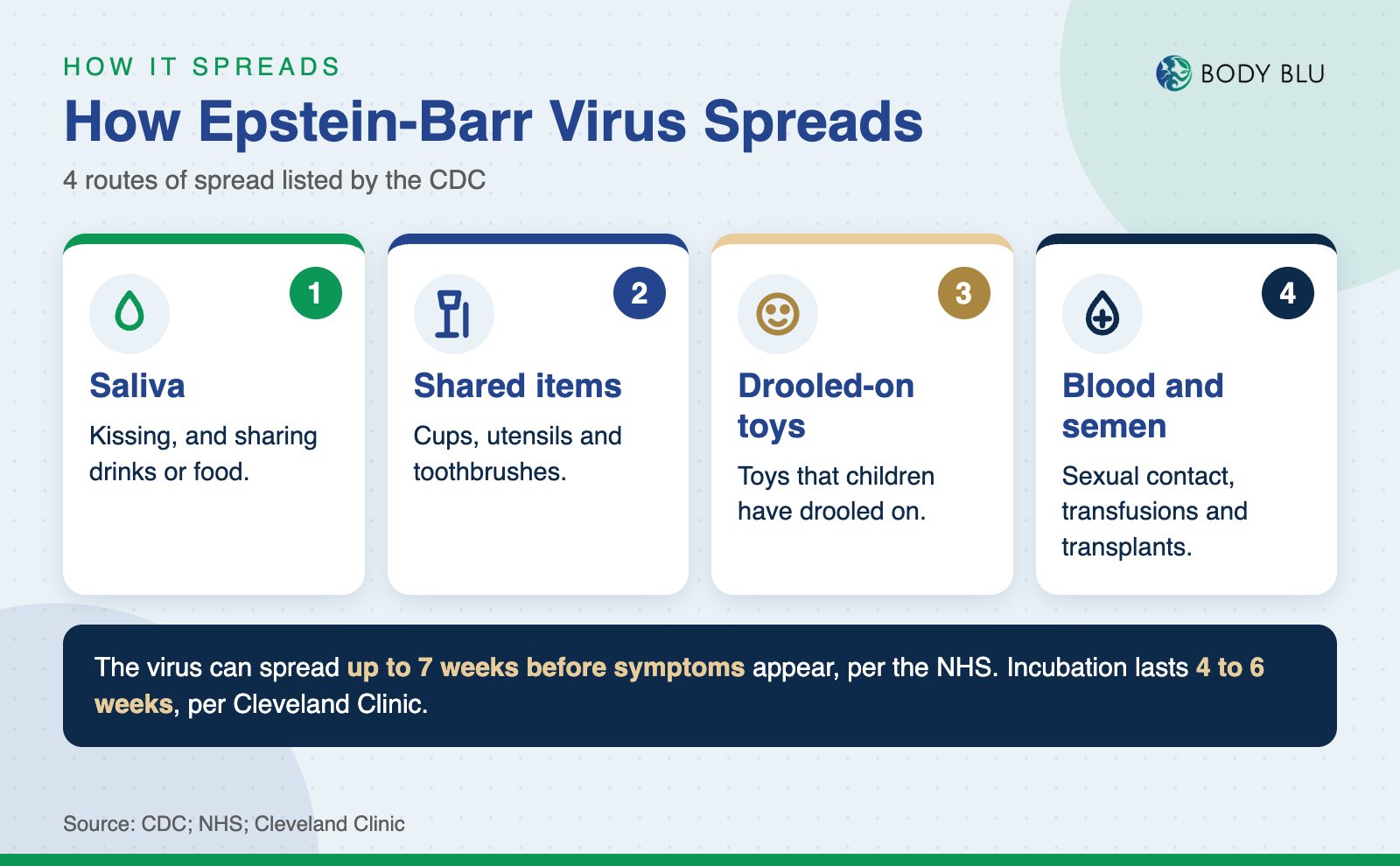
EBV spreads mainly through saliva, according to the CDC. The CDC lists 4 routes of spread, shown below.
- Kissing, and sharing drinks or food
- Sharing cups, utensils or toothbrushes
- Contact with toys that children have drooled on
- Blood and semen during sexual contact, blood transfusions and organ transplants
The CDC adds that the virus probably survives on an object at least as long as the object stays moist. Cleveland Clinic recommends washing hands after touching items with saliva on them. The graphic below summarizes the routes and the contagious period.
How Long Is Epstein Barr Virus Contagious?
EBV stays contagious for weeks and can spread before symptoms start, according to the CDC. The NHS says people can pass on glandular fever up to 7 weeks before symptoms. The virus may stay contagious for several months after illness. Cleveland Clinic gives the incubation period, the time from exposure to first symptoms, as 4 to 6 weeks.
Reactivation can restart the spread. The CDC states that a reactivated virus can infect others no matter how much time has passed since the first infection. The virus therefore matters long after the first illness ends, which leads to what the virus does in the body.
What Does Epstein Barr Virus Do in the Body?
EBV moves through 4 stages: incubation, acute infection, latency and sometimes reactivation. The table below shows what happens at each stage, based on CDC and Cleveland Clinic descriptions.
| Stage | What happens | Timing |
|---|---|---|
| Incubation | The virus enters the body and no symptoms show yet | 4 to 6 weeks after infection |
| Acute infection | Symptoms such as fatigue, fever and a sore throat can appear | Better in 2 to 4 weeks, with fatigue sometimes lasting months |
| Latency | The virus goes inactive inside the body | For life |
| Reactivation | The virus wakes up and may or may not cause symptoms | Any time after the first infection |
Latency explains why EBV never fully leaves the body. Cleveland Clinic lists stress, a weak immune system and menopause or hormone changes as reactivation triggers. The CDC adds that reactivation does not always cause symptoms. People with weakened immune systems are more likely to have symptoms when the virus reactivates.
Is Mono Caused by Epstein-Barr Virus?
Mono is most commonly caused by EBV, according to the CDC. At least 1 out of 4 teenagers and young adults infected with EBV develop mono. Mono symptoms typically appear 4 to 6 weeks after infection, per the CDC.
Other infections can also cause mono, so a mono diagnosis does not always mean EBV. The CDC lists cytomegalovirus, toxoplasmosis, HIV, rubella, hepatitis A, B or C and adenovirus. Symptom overlap among these infections leads directly to the question of how to tell them apart.
How to Know If You Have Epstein Barr Virus?
Know if you have EBV by asking a provider for a blood test that detects antibodies, as the CDC describes. Symptoms alone cannot confirm the virus. The CDC says diagnosis is challenging because EBV symptoms match those of other illnesses.
The CDC lists 7 symptoms of EBV infection, shown below. Our EBV symptoms guide covers each one in detail.
- Fatigue
- Fever
- Inflamed throat
- Swollen lymph nodes in the neck
- Enlarged spleen
- Swollen liver
- Rash
Providers typically diagnose typical mono from symptoms, and the CDC says lab tests are not usually needed in that case. The CDC advises a search for other causes of chronic illness when symptoms last over 6 months without lab-confirmed EBV. Chronic fatigue syndrome is one such cause, covered in our guide to chronic fatigue symptoms.
Can You Have Epstein Barr Virus and Not Know It?
Yes, you can carry EBV without ever knowing it. The CDC says most people get infected in their lifetime, especially in childhood, and have no symptoms. Childhood infections either cause no symptoms or look like mild, brief illnesses.
Cleveland Clinic adds that an infected person does not need symptoms to pass the virus on. A blood test can reveal a past infection that symptoms never showed. The next section explains how that test works.
How to Get Tested for Epstein Barr Virus?
Get tested for EBV by asking a provider to order an EBV antibody blood test. Antibodies are proteins the immune system makes in response to a virus. The CDC says providers can test for antibodies to 3 EBV antigens. The 3 antigens are viral capsid antigen (VCA), early antigen (EA) and EBV nuclear antigen (EBNA).
The table below shows when each antibody appears, based on CDC laboratory guidance.
| Antibody | When it appears | What it suggests |
|---|---|---|
| Anti-VCA IgM | Early in infection; usually gone in 4 to 6 weeks | Recent infection |
| Anti-VCA IgG | Peaks 2 to 4 weeks after onset; stays for life | Current or past infection |
| Anti-EA IgG | Acute phase; undetectable after 3 to 6 months | Active infection in many people |
| Anti-EBNA | Appears 2 to 4 months after onset; stays for life | Past infection |
The CDC notes that 20% of healthy people may carry anti-EA antibodies for years, so that marker is not definitive. The CDC says antibody tests are not usually needed for typical mono but may be needed for atypical cases. Body Blu reviews EBV antibody patterns through functional lab work alongside symptoms and history.
The CDC does not recommend the Monospot test for general use, because it produces both false positive and false negative results. Cleveland Clinic says a provider may repeat the antibody test 10 days to 2 weeks later. Antibodies might not show up early. The results then need careful reading.
What Do Epstein Barr Virus Antibodies Mean in Your Results?
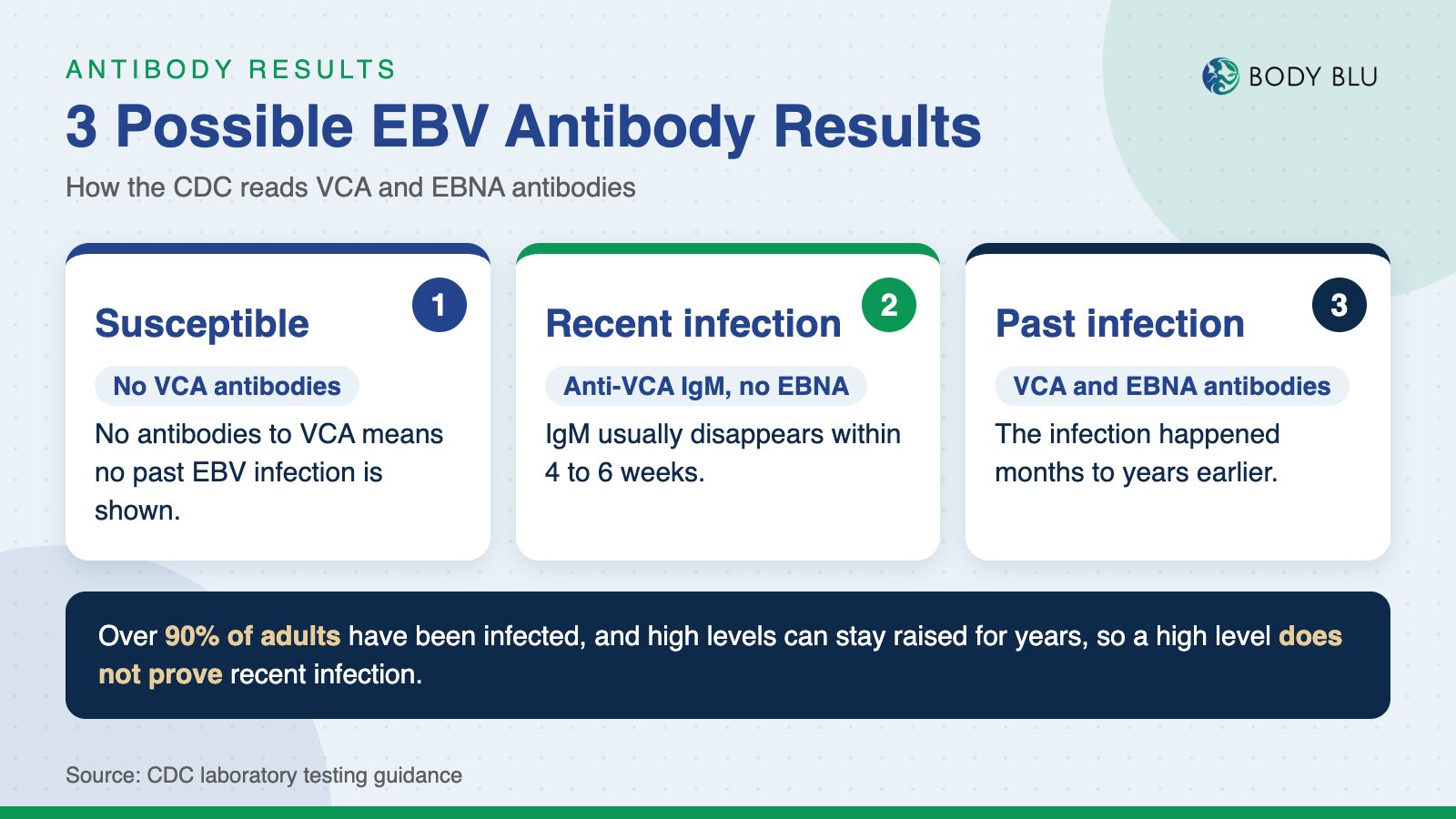
Epstein Barr virus antibodies point to one of 3 results: susceptible, recent infection or past infection, according to the CDC. The CDC reads the results in this order.
- No antibodies to VCA means a person is susceptible to infection.
- Anti-VCA IgM without antibody to EBNA means a primary, or recent, infection.
- Antibodies to both VCA and EBNA suggest a past infection from several months to years earlier.
The graphic below shows the same 3 results side by side.
Does a High Antibody Level Mean an Active Infection?
A high antibody level does not prove an active infection. The CDC states that over 90% of adults have been infected, so most adults show antibodies from years earlier. High antibody levels may stay raised for years and are not diagnostic of recent infection.
A provider therefore reads the pattern, the timing and the symptoms together. The CDC notes that interpreting EBV antibody tests requires familiarity with the tests and the patient's clinical information. Once results are clear, the question turns to treatment.
Can You Remove Epstein Barr Virus or Treat It?
No treatment removes EBV from the body, because there is no specific treatment for EBV, according to the CDC. Cleveland Clinic states that treatment addresses symptoms only. The CDC recommends drinking fluids to stay hydrated, getting plenty of rest and taking over-the-counter medicines for pain and fever.
Medicine choices need care. The CDC says people with mono should not take penicillin antibiotics such as ampicillin or amoxicillin. The NHS adds that antibiotics do not work because glandular fever is caused by a virus. A provider can advise on pain and fever medicine.
The spleen needs protection during illness. The CDC advises avoiding contact sports until full recovery, because an enlarged spleen can rupture. The NHS lists difficulty breathing, trouble swallowing and severe stomach pain as signs that need urgent care.
How Can You Avoid Epstein Barr Virus?
Avoid EBV by limiting contact with saliva from people who have the infection, as the CDC advises. The CDC says no vaccine protects against EBV infection. Cleveland Clinic recommends not kissing, sharing food or drinks, or sharing a toothbrush with someone who has the virus.
What Else Should You Know About Epstein Barr Virus?
Is Epstein Barr Virus Linked to Chronic Fatigue?
EBV links to chronic fatigue, and about 1 in 10 infected people develop an illness like ME/CFS, according to the CDC. ME/CFS stands for myalgic encephalomyelitis/chronic fatigue syndrome. That figure shows a link, not proof that EBV alone causes the illness.
Fatigue that lasts months deserves a full work-up of thyroid, adrenal, sleep and nutrient status. Body Blu offers chronic fatigue support built around that kind of review.
Does Epstein Barr Virus Reactivate After COVID?
EBV reactivation appears more often in people with long-lasting post-COVID fatigue, according to one 2025 study. The Auris Nasus Larynx study found reactivation in 40 of 140 patients (28.6%) with persistent fatigue, against 9 of 80 controls (11.3%).
The study shows an association and does not show that COVID causes reactivation. People with lasting symptoms after infection can ask a provider about long COVID recovery options. The same virus has a link to other long-term conditions.
Is Epstein Barr Virus Linked to Multiple Sclerosis or Cancer?
EBV has a documented link to multiple sclerosis (MS), and MS risk rose 32-fold after EBV infection in a Harvard T.H. Chan School of Public Health study. The study followed more than 10 million US military adults and counted 955 MS cases.
Cleveland Clinic names Burkitt lymphoma and nasopharyngeal cancer as rare cancers that EBV can lead to. These links involve rare outcomes, since 9 out of 10 adults carry the virus. Researchers also study EBV in autoimmune disorders more broadly.
How Can Body Blu Help With Epstein Barr Virus?
Body Blu helps by reading EBV antibody results in context. We review the results with your symptoms, immune markers, adrenal function and nutrient status. Dr. Joseph Scarpuzzi, a licensed naturopathic doctor, leads that review, and the plan fits alongside your primary care provider. Our EBV care starts with your history and timeline.
Persistent fatigue after an infection deserves a careful look rather than a guess. A provider can check whether antibody patterns, stress load or other conditions explain how you feel. Questions are welcome, so request a consult.
Understanding Epstein-Barr virus starts with testing, not symptoms alone, and with a careful read of antibody patterns, timing and symptoms together. Each plan fits alongside the advice of your primary care provider. We built the Body Blu approach around that principle.


Resources
From Our Blog
Naturopathic insights, wellness tips, and updates from the Body Blu team.

Wellness
Is Insulin Resistance Diabetes? Insulin Resistance vs Prediabetes
No, insulin resistance is not diabetes. It describes cells that respond poorly to insulin, while diabetes starts at an A1C of 6.5% or above. Compare insulin resistance, prediabetes and type 2 diabetes.
Wellness
What Is the Epstein Barr Virus and How Do You Know You Have It?
Epstein-Barr virus (EBV) is a common herpes family virus that infects about 95% of US adults. It spreads through saliva, and an antibody blood test shows a current or past infection.

Treatments
How to Treat Insulin Resistance and What Helps Insulin Resistance
Treat insulin resistance with lifestyle changes first: 150 minutes of weekly activity, sleep and 5% to 7% weight loss. Metformin and GLP-1 medicines add options, and supplements lack proven benefit without a deficiency.